

Share to


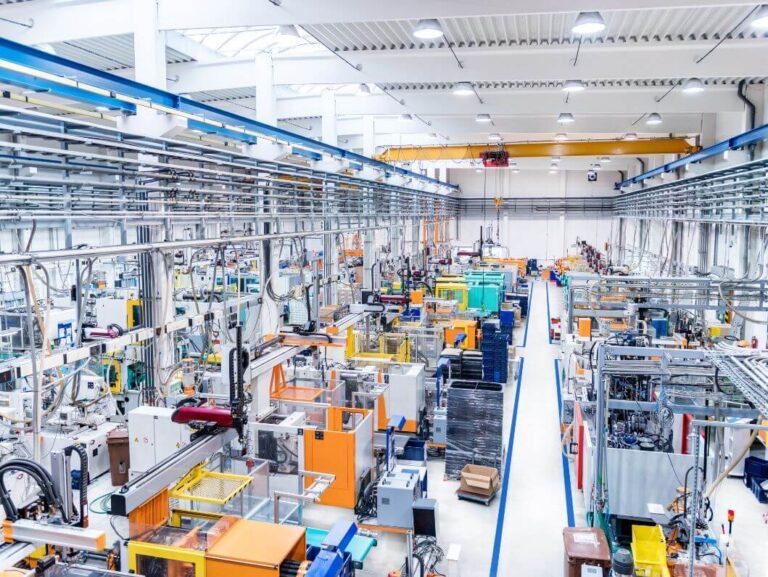
For any emerging food or beverage brand, the path to success is a high-wire act. You’ve poured your heart and soul into a unique product, you have a vision for your brand, and you’ve generated some initial market buzz. Now comes the biggest hurdle: scaling production. The traditional route—building or buying your own manufacturing facility—is an option, but for a startup, it’s a financial Everest, fraught with risk and requiring a monumental capital investment.
This is where the financial agility of co-packing comes in, transforming a seemingly impossible climb into a strategic, scalable journey. Instead of shouldering the burden of capital expenditures (CapEx), you can leverage the power of operational expenditures (OpEx), freeing up your capital to fuel the growth engine of your business. Platforms like CoPack Connect make this shift even more accessible, helping brands quickly connect with qualified contract manufacturers and packagers. This isn’t just a business decision; it’s a fundamental shift in financial strategy that can be the difference between a promising idea and a thriving, sustainable brand.
Understanding the Financial Divide: CapEx vs. OpEx
To truly appreciate the financial power of co-packing, it’s essential to understand the difference between two key accounting concepts:
- Capital Expenditures (CapEx): These are significant, one-time investments in long-term assets that a company expects to use for more than a year. In the food industry, this includes purchasing a manufacturing facility, buying production equipment (mixers, fillers, labelers, ovens, etc.), building a warehouse, and investing in major infrastructure like utility systems. CapEx is a heavy lift, requiring either a significant amount of cash on hand or, more commonly, taking on substantial debt. These investments are depreciated over time, meaning their cost is spread out on the balance sheet, but the upfront financial outlay and associated long-term commitments are immense.
- Operational Expenditures (OpEx): These are the day-to-day costs of running a business. They are recurring expenses that are fully expensed in the period they are incurred. In a co-packing relationship, your OpEx includes the cost per unit produced, which covers raw materials, labor, overhead, and the co-packer’s profit margin. It also includes costs like marketing, sales team salaries, and administrative expenses. OpEx is flexible and can be adjusted based on production volume and market demand.
For an emerging brand, the CapEx route is often a non-starter. The cost of a new food manufacturing facility can easily run into the millions, and that’s before a single piece of equipment is purchased. The financial risk is staggering, and it ties up the very capital you need to invest in the activities that actually grow your brand: marketing, product innovation, and expanding your sales channels. Platforms such as CoPack Connect highlight this divide by showing brands how to bypass CapEx entirely and move straight into scalable, flexible OpEx-driven production.
The Financial Benefits of Co-Packing: A Deeper Dive
By choosing a co-packing partner, you effectively convert a series of daunting capital expenditures into manageable operational expenses. Let’s break down the key financial benefits this enables:
1. Avoid Upfront Capital Investment in Facilities and Equipment:
This is the most significant financial advantage. Instead of spending millions on a facility and equipment, you pay a per-unit fee to a co-packer who already owns and operates a state-of-the-art facility. This fee includes all the “CapEx” costs of the co-packer, essentially allowing you to rent access to their expensive assets rather than buying them yourself. This frees up your capital to be used for strategic, growth-oriented activities. Imagine what you can do with a few hundred thousand dollars in marketing budget versus having it tied up in a stainless-steel mixer.
2. Reduce Overhead and Fixed Costs:
Owning a facility comes with a mountain of fixed costs. You are responsible for rent or mortgage payments, property taxes, insurance, utilities, maintenance, and facility management. These costs don’t disappear just because your production volume fluctuates. With a co-packer, these costs are baked into your per-unit price, and they flex with your needs. If sales slow down, your production costs decrease. You’re not paying to keep the lights on and the machinery running in an empty factory. This flexibility is a financial lifeline for emerging brands in an unpredictable market.
3. Leverage Economies of Scale:
A large co-packer serves multiple brands, which means they can purchase raw materials and packaging in massive quantities, securing a much lower price than a small brand could on its own. They pass these cost savings on to you, which helps improve your profit margins and allows you to price your product more competitively. You get the benefit of a large corporation’s purchasing power without being a large corporation yourself. This is an immense operational and financial advantage.
4. Mitigate Financial Risk:
The food industry is dynamic, with consumer tastes and trends shifting quickly. If you invest millions in equipment for a specific product, you are locked into that technology. If consumer demand for that product wanes, your expensive assets can become obsolete. A co-packing relationship offers an escape hatch. If you need to pivot your product line, you can simply change co-packers or work with your current one to produce a different type of product, without the financial burden of selling or repurposing expensive, specialized machinery. This level of agility is priceless.
5. Improve Cash Flow Management:
Capital investments are a major drain on cash flow. Even if you finance the purchase, the debt service payments can be a significant monthly burden. Operational expenses, however, are directly tied to sales and revenue. You produce and pay for units as you need them and as you sell them. This creates a much healthier and more predictable cash flow cycle, which is absolutely critical for a startup that relies on working capital to fund its day-to-day operations.
6. Access to Expertise Without the Salary:
Beyond the physical assets, a co-packer provides a team of experts in food science, quality assurance, logistics, and supply chain management. These are high-level positions with salaries that would be out of reach for most emerging brands. By outsourcing, you get access to this expertise as part of your per-unit cost, ensuring your product is made efficiently and safely, without the need for a bloated in-house team.
Making the Strategic Shift: Beyond the Numbers
Choosing to co-pack is more than just a financial decision; it’s a strategic choice to focus on your core competencies. By offloading the complexities and financial burdens of production, you can dedicate your time, talent, and, most importantly, your limited capital to the activities that truly define your brand’s future:
- Product Innovation: Freed from the daily grind of facility management, you can focus on research and development for new products, exploring new flavors and formulations that will keep your brand relevant and exciting.
- Marketing and Sales: With capital in hand, you can invest in building a powerful brand presence, launching effective marketing campaigns, and securing new distribution channels. This is where you create demand and build a loyal customer base.
- Talent and Team Building: You can hire top talent in marketing, sales, and business development—the people who will build your brand, not just make your product.
The Right Partner is the Key to Financial Agility
The financial benefits of co-packing are clear, but they are only fully realized by partnering with the right co-packer. A reliable, transparent, and experienced co-packer understands the financial needs of emerging brands. They work with you to create a partnership that scales, providing the capacity you need, when you need it, and ensuring your costs remain aligned with your revenue.
This is the power of CoPack Connect. It doesn’t just help you find a manufacturer; it helps you find a strategic financial partner. One that understands your balance sheet is a story of potential, not just a list of assets. By connecting you with a vetted network of co-packers, CoPack Connect enables you to bypass the insurmountable capital investment of a private facility and instead leverage the financial agility that will truly enable your brand to grow, innovate, and thrive.Don’t let the daunting financial requirements of traditional manufacturing be the roadblock to your brand’s success. Embrace the financial agility that co-packing provides—and let CoPack Connect be the bridge that gets you there.
To get started with CoPack Connect for free today click here.
Share to
Related Resources
How Private Label Growth Can Benefit Emerging Food Brands
Private label has moved well beyond its traditional role as a lower-cost alternative to national brands. Today, retailers are investing…
June 18, 2026

Collaborating on Ingredient Sourcing with Your Co-Manufacturer
Ingredient sourcing has become one of the most complex and risk-sensitive aspects of contract manufacturing. Volatile supply chains, fluctuating raw…
April 24, 2026

How Emerging Brands Can Tackle Supply Chain Disruptions
Strengthening Operational Stability Through Smarter Planning and Strategic Partnerships Supply chain volatility can spell doom for an emerging brand. It…
February 2, 2026
