

Cuisines
British cuisine, renowned for its rich history and comforting flavors, reflects the diverse cultural influences that have shaped the United Kingdom over centuries. From hearty breakfasts to elegant afternoon teas, British food offers a range of dishes that cater to different tastes and occasions. Rooted in traditional recipes and regional specialties, British cuisine has evolved to incorporate global flavors and modern culinary techniques, creating a vibrant and dynamic food culture.
-
01 Origins
The origins of British cuisine can be traced back to the early Celtic and Anglo-Saxon inhabitants of the British Isles, who relied on locally sourced ingredients such as grains, meats, and seasonal vegetables. The Roman conquest introduced new foods and cooking methods, including wine, herbs, and spices. Over time, British cuisine continued to evolve, influenced by the Normans, the medieval spice trade, and the expansive British Empire, which brought ingredients and culinary ideas from around the world. This blend of indigenous and international influences has resulted in a rich culinary heritage that is both traditional and innovative.
-
02 Traditional Dishes
British cuisine boasts an array of traditional dishes that vary by region, each reflecting local ingredients and culinary practices:
- Fish and Chips: A quintessential British dish featuring battered and deep-fried fish, typically cod or haddock, served with thick-cut chips (fries) and often accompanied by mushy peas and tartar sauce.
- Sunday Roast: A traditional Sunday meal consisting of roasted meat (usually beef, lamb, or chicken), served with Yorkshire pudding, roast potatoes, vegetables, and gravy.
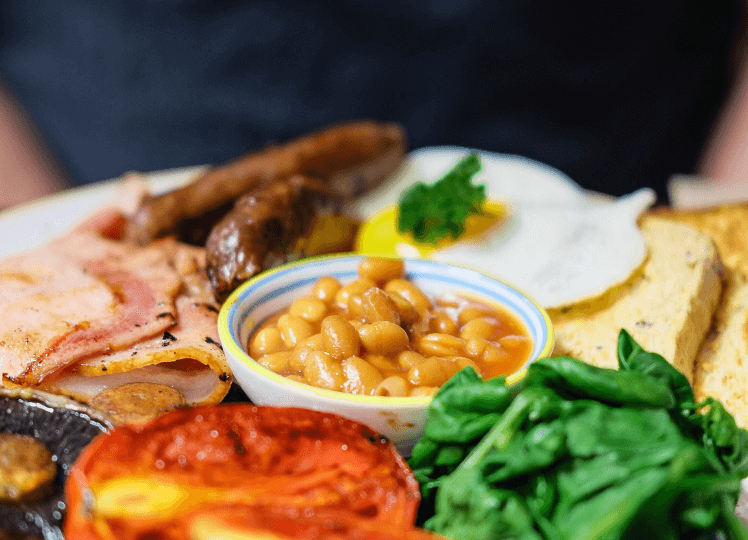
- Full English Breakfast: A hearty breakfast plate including eggs, bacon, sausages, baked beans, tomatoes, mushrooms, black pudding, and toast.
- Shepherd’s Pie and Cottage Pie: Savory pies made with minced meat (lamb for shepherd’s pie, beef for cottage pie), topped with mashed potatoes and baked until golden brown.
- Bangers and Mash: Sausages served with mashed potatoes and onion gravy.
- Afternoon Tea: A traditional light meal typically served in the afternoon, featuring finger sandwiches, scones with clotted cream and jam, and an assortment of pastries and cakes.
- Ploughman’s Lunch: A simple yet satisfying meal including cheese, pickles, cold meats, bread, and salad, often served in pubs.
-
03 Ingredients and Spices
British cuisine relies heavily on fresh, locally sourced ingredients and a variety of spices:
- Meats: Beef, lamb, pork, and poultry are staples in British cooking, often sourced from local farms.
- Fish and Seafood: Cod, haddock, salmon, and shellfish are popular, reflecting the UK’s maritime heritage.
- Vegetables: Root vegetables like potatoes, carrots, and parsnips are commonly used, along with peas, beans, and leafy greens.
- Herbs and Spices: Traditional herbs like rosemary, thyme, and parsley are frequently used, while spices such as black pepper, nutmeg, and mustard add depth to dishes.
- Dairy Products: British cuisine features a variety of cheeses (e.g., Cheddar, Stilton), as well as cream, butter, and milk.
-
04 Cooking Techniques
British cooking involves a variety of techniques, both traditional and modern:
- Roasting: A common method for cooking meats and vegetables, enhancing their natural flavors.
- Baking: Used for making pies, pastries, bread, and cakes.
- Boiling and Steaming: Techniques for preparing vegetables and puddings.
- Frying: Applied in dishes like fish and chips and various breakfast items.
- Grilling: Known as “broiling” in the US, used for meats and seafood.
-
05 Modern Influences and Adaptations
In recent years, British cuisine has continued to evolve, influenced by global culinary trends and the availability of new ingredients. Contemporary British chefs are experimenting with traditional flavors and modern techniques to create innovative dishes that honor the roots of British cooking while appealing to a global audience. Fusion cuisine, incorporating elements from Indian, Chinese, and Mediterranean cooking, has become increasingly popular, reflecting the multicultural nature of modern Britain.
-
06 Modern Uses of British Cuisine in Consumer Products
Today, British cuisine has a broad presence in consumer products, reflecting its rich flavors and culinary heritage:
- Packaged Foods: Ready-to-eat meals, snacks, and sauces that bring the flavors of Britain to homes around the world.
- Spices and Seasonings: Pre-mixed spice blends and seasoning packets for easy preparation of British dishes.
- Beverages: Traditional drinks like tea, cider, and ales.
- Condiments: A variety of sauces, chutneys, and pickles that enhance the flavor of meals.
Applications in British Cuisine

Ready-to-Eat Meals
Contract packagers can efficiently package ready-to-eat British meals, such as shepherd’s pie, fish and chips, and full English breakfasts, ensuring they are sealed for freshness and convenience.

Spices and Seasonings
British spice blends and seasoning mixes, such as curry powder and mustard, can be packaged in various formats including sachets, jars, and resealable pouches.

Sauces and Condiments
Traditional British sauces like gravy, mint sauce, and chutney require careful packaging to maintain their flavor and shelf life. Contract packagers offer solutions such as glass jars, plastic bottles, and single-serve packets.
Beverages
Drinks like tea, cider, and ales can be packaged in bottles, cartons, or cans for easy distribution and consumption.
Snack Foods
Popular British snacks, such as crisps, pork pies, and Scotch eggs, benefit from specialized packaging that keeps them fresh and flavorful.

2000+
Manufacturers