

Cuisines
Indian cuisine, renowned for its diversity and depth of flavors, represents one of the world’s most varied and complex culinary traditions. Known for its bold spices, vibrant colors, and intricate cooking techniques, Indian food reflects the country’s vast geography, rich cultural heritage, and historical influences. From the spicy curries of the south to the tandoori delights of the north, Indian cuisine offers a gastronomic journey that is as fascinating as it is delicious.
-
01 Origins
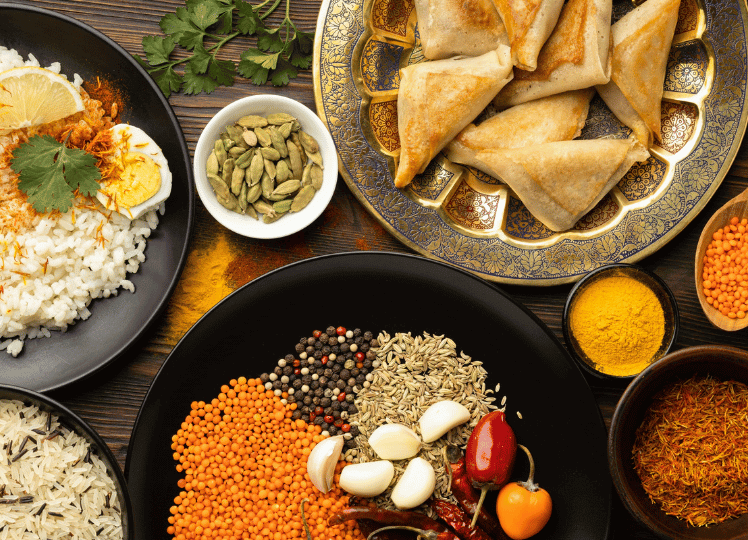
The origins of Indian cuisine date back thousands of years to the Indus Valley civilization and the Vedic period, where early agricultural practices laid the foundation for the country’s culinary heritage. The cuisine evolved significantly with the influence of various dynasties, including the Mughals, who introduced rich, aromatic dishes and cooking techniques. Trade routes also played a crucial role in shaping Indian cuisine, bringing in spices, ingredients, and culinary practices from regions such as Persia, the Middle East, and Southeast Asia.
-
02 Traditional Dishes
Indian cuisine boasts an extensive array of traditional dishes, each reflecting the unique ingredients and culinary techniques of its region:
- Biryani: A fragrant rice dish cooked with marinated meat (such as chicken, mutton, or fish), aromatic spices, and herbs, often garnished with fried onions and boiled eggs.
- Butter Chicken: A creamy, tomato-based curry made with marinated and grilled chicken pieces, rich in spices and butter.
- Dosa: A thin, crispy pancake made from fermented rice and lentil batter, typically served with sambar (a spicy lentil soup) and coconut chutney.
- Rogan Josh: A flavorful lamb curry from Kashmir, slow-cooked with yogurt, garlic, and a blend of spices including cardamom, cloves, and cinnamon.
- Palak Paneer: A vegetarian dish consisting of paneer (Indian cottage cheese) cooked in a creamy spinach sauce seasoned with garlic, ginger, and garam masala.
- Chole Bhature: A popular North Ind
-
03 Ingredients and Spices
Indian cuisine is characterized by its extensive use of spices and fresh ingredients, which create its distinctive flavors:
- Cumin and Coriander: Essential spices used in many Indian dishes for their earthy and citrusy flavors.
- Turmeric: Known for its bright yellow color and warm, peppery taste, used in curries, rice dishes, and as a health supplement.
- Cardamom and Cloves: Aromatic spices that add depth and warmth to both savory and sweet dishes.
- Ginger and Garlic: Fresh ginger and garlic are staples in Indian cooking, used to add a pungent and zesty flavor.
- Chilies: Both fresh and dried chilies are used to add heat and complexity to dishes. Varieties include green chilies, red chilies, and the famous Bhut Jolokia (ghost pepper).
- Lentils and Legumes: A significant source of protein, used in dishes like dal (lentil stew), chole (chickpea curry), and rajma (kidney bean curry).
-
04 Cooking Techniques
Indian cooking employs a variety of techniques to bring out the best in its ingredients:
- Tempering (Tadka): A method of cooking whole spices in hot oil or ghee to release their flavors, often used as a finishing touch for curries and dals.
- Roasting and Grinding: Spices are often dry roasted and ground to create masala blends that are the backbone of many Indian dishes.
- Slow Cooking: Techniques such as dum (slow cooking in a sealed pot) and simmering are used to develop deep, rich flavors.
- Fermenting: Used for making batters for dishes like idli and dosa, which require fermentation to achieve their characteristic texture and taste.
- Baking in Tandoor: Traditional clay ovens (tandoors) are used to bake bread like naan and to cook marinated meats, imparting a unique smoky flavor.
-
05 Modern Influences and Adaptations
Indian cuisine continues to evolve, incorporating global culinary trends and new ingredients. Contemporary Indian chefs experiment with traditional recipes, adding modern twists while respecting the essence of the cuisine. The global popularity of Indian street food, such as samosas, pav bhaji, and chaat, has introduced these flavors to a wider audience.
-
06 Modern Uses of Indian Cuisine in Consumer Products
Indian cuisine’s rich flavors and culinary traditions have a significant presence in consumer products, making it accessible to a global audience:
- Packaged Foods: Ready-to-eat meals, snacks, and sauces that bring the flavors of India to homes around the world.
- Spices and Seasonings: Pre-mixed spice blends and seasoning packets for easy preparation of Indian dishes.
- Beverages: Traditional drinks like chai (spiced tea), lassi (yogurt drink), and coconut water.
- Condiments: A variety of chutneys, pickles, and sauces that enhance the flavor of meals.

Applications in Indian Cuisine

Ready-to-Eat Meals
Contract packagers can efficiently package ready-to-eat Indian meals, such as biryani, curry dishes, and samosas, ensuring they are sealed for freshness and convenience.

Spices and Seasonings
Indian spices and seasoning blends, such as garam masala, curry powder, and tandoori spice mix, can be packaged in various formats including sachets, jars, and resealable pouches.

Sauces and Condiments
Traditional Indian sauces like curry paste, chutneys, and pickles require careful packaging to maintain their flavor and shelf life. Contract packagers offer solutions such as glass jars, plastic bottles, and single-serve packets.
Beverages
Drinks like chai, lassi, and masala milk can be packaged in bottles, cartons, or powder sachets for easy distribution and consumption.
Snack Foods
Popular Indian snacks, such as namkeen (savory mixes), samosas, and pakoras, benefit from specialized packaging that keeps them fresh and flavorful.


2000+
Manufacturers


