

Share to


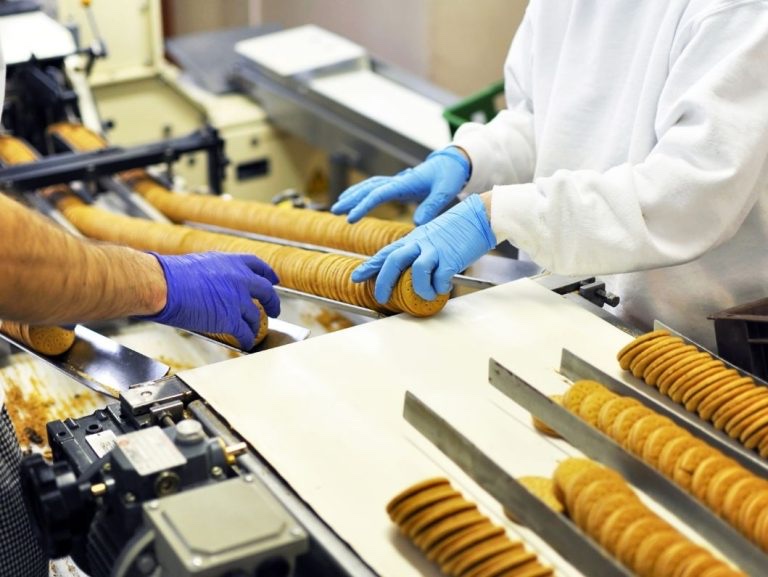
The food contract manufacturing sector stands at an inflection point, poised to transition from a service-oriented industry to a strategic innovation engine powering the global food system. As consumer demands fracture into niche preferences and geopolitical pressures reshape supply chains, food brands and their manufacturing partners are forging unprecedented alliances. These partnerships are evolving into deeply integrated collaborations that blend R&D, sustainability initiatives, and data-driven decision-making-a far cry from the transactional relationships that dominated the industry just a decade ago.
From Transactional Outsourcing to Strategic Co-Creation
The traditional model of contract manufacturing-where brands simply rented production capacity-is being supplanted by partnerships that resemble joint ventures. Leading food corporations now maintain networks of over 100 manufacturing partners, with these collaborations accounting for 30-40% of their total production output. This shift reflects a fundamental rebalancing of power dynamics: Where manufacturers once competed solely on cost and efficiency, they now differentiate themselves through proprietary technologies, sustainability credentials, and consumer insights capabilities.
A 2030 projection suggests that 70% of new product development in the food sector will originate through co-manufacturing partnerships, up from 45% in 2025. This surge is driven by manufacturers’ increasing investments in advanced R&D facilities capable of rapid prototyping. For instance, several North American co-manufacturers have developed AI-powered formulation platforms that reduce new product development cycles from 18 months to under 90 days. These systems analyze global consumer trend data, regulatory requirements, and supply chain variables to generate compliant, cost-optimized recipes-capabilities that enable brands to capitalize on emerging trends before competitors.
The economic rationale for these partnerships has also matured. While cost reduction remains important (typically accounting for 15-25% of savings versus in-house production), brands increasingly value risk-sharing models that tie manufacturer compensation to product success metrics. Some innovative agreements now include:
- Revenue-sharing structures for co-developed products
- Joint IP ownership for novel production technologies
- Sustainability-linked pricing tied to carbon reduction targets
This evolution mirrors broader trends in high-tech manufacturing, where contract partners have become essential collaborators in bringing complex products to market.
Technology as the Backbone of Future Partnerships
The factory floor of 2030 will bear little resemblance to today’s production facilities. A convergence of Industry 4.0 technologies is creating manufacturing ecosystems where:
- AI-driven production lines automatically adjust recipes based on real-time ingredient quality data
- Blockchain-enabled traceability systems provide brands with millisecond-level visibility into raw material provenance
- Predictive maintenance algorithms reduce equipment downtime to under 1%
These technological leaps are transforming manufacturers into data powerhouses. One European co-manufacturer recently demonstrated the ability to track 387 distinct quality metrics per production batch, providing brands with unprecedented granularity in quality assurance. This data richness enables partnerships where manufacturers function as continuous improvement partners, using machine learning to identify optimization opportunities that would be invisible to human analysts.
The integration of digital twins-virtual replicas of physical production systems-is particularly transformative. Brands can now simulate new product runs in virtual environments, predicting everything from optimal equipment configurations to potential supply chain bottlenecks. A major snack food manufacturer reduced time-to-market for new SKUs by 40% using this approach, while simultaneously cutting material waste by 18%.
Sustainability-Driven Manufacturing Ecosystems
Circular economy principles are reshaping partnership dynamics, with leading manufacturers offering carbon-as-a-service platforms that help brands achieve Scope 3 emissions targets. A pioneering program in the Nordic region combines:
- Agricultural waste upcycling systems that convert byproducts into edible ingredients
- Closed-loop water recovery achieving 98% reuse rates
- Renewable energy microgrids powered by production waste
These systems create powerful economic incentives-a consortium of European manufacturers achieved 22% higher margins on sustainability-optimized production lines compared to conventional setups. The environmental impact is equally striking, with early adopters reducing per-unit carbon emissions by 34-41% across partnered production runs.
Regulatory pressures are accelerating this transition. The EU’s Corporate Sustainability Due Diligence Directive (CSDDD) now holds brands legally responsible for environmental practices throughout their supply chains-a mandate that makes manufacturers’ sustainability capabilities a critical partnership criterion. Forward-thinking manufacturers are responding by developing sustainability scorecards that quantify the ecological impact of different production scenarios, enabling brands to make informed trade-offs between cost, speed, and environmental impact.
Globalization and the New Geography of Production
The geography of food manufacturing is undergoing a seismic shift. While Asia Pacific maintains its dominance (53% of global contract manufacturing revenue), new production corridors are emerging in:
- North Africa: Leveraging proximity to European markets and solar energy potential
- Central America: Specializing in tropical fruit processing with blockchain-enabled fair trade certifications
- Eastern Europe: Combining EU regulatory alignment with lower labor costs
This decentralization is driven by brands’ need for resilient, multi-regional supply networks. The most sophisticated manufacturers now offer mirrored production capabilities across continents, allowing brands to shift production between regions in response to geopolitical disruptions or trade policy changes. A recent case saw a U.S. snack brand avoid $12 million in tariffs by dynamically rerouting production between Mexican and Malaysian facilities operated by the same manufacturing partner.
Emerging markets are also becoming innovation hotspots. A Kenyan manufacturer recently developed a mobile processing unit that enables smallholder farmers to pre-process crops at the edge of fields, reducing post-harvest losses by 27% while creating new raw material streams for partnered brands.
Hyper-Customization Through Data Symbiosis
The next frontier in food manufacturing partnerships lies in mass customization systems capable of producing personalized nutrition products at industrial scale. A breakthrough pilot in Germany combines:
- AI formulation engines that create individualized recipes based on consumer health data
- Modular production lines that switch between product variants without downtime
- Blockchain-enabled packaging that updates nutritional information in real time
This capability transforms manufacturers into precision nutrition partners, enabling brands to offer products tailored to individual dietary needs, genetic profiles, or even gut microbiomes. Early movers in this space report 34% higher customer retention rates compared to conventional product lines.
The data flows enabling this customization are creating new partnership models. A leading Asian manufacturer now offers consumer insight subscriptions, providing brands with anonymized consumption data from its production network-intelligence that helps shape both product development and marketing strategies.
Navigating Regulatory Complexity Through Shared Expertise
As global food regulations fragment-with over 47 major markets implementing unique labeling, safety, and sustainability requirements by 2025-manufacturers’ regulatory capabilities are becoming a critical differentiator. Advanced manufacturers maintain global compliance databases that track:
- 23,000+ ingredient regulations
- 148 certification schemes
- 91 sustainability reporting frameworks
This infrastructure enables partners to launch products in multiple markets simultaneously while avoiding compliance missteps. A recent analysis found that brands using compliance-optimized manufacturing partners reduced time-to-international-market by 62% compared to those managing regulations internally.
The most strategic partnerships now include regulatory co-development components, where manufacturers help shape emerging standards through trade associations and government consultations. A North American consortium recently influenced the FDA’s updated guidance on AI in food production, creating favorable conditions for its manufacturing partners.
The Path Forward
The future of food contract manufacturing partnerships will be characterized by deep interoperability-shared systems, aligned incentives, and integrated teams that function as extensions of brand organizations. Success will hinge on manufacturers’ ability to deliver:
- Technology stacks that provide real-time supply chain transparency
- Sustainability infrastructures capable of meeting net-zero targets
- Regulatory intelligence systems that future-proof product portfolios
Brands that cultivate these partnerships will gain access to manufacturing ecosystems where production is just one node in a value network encompassing consumer insights, material science innovation, and circular economy solutions. In this evolving landscape, the most valuable manufacturing partners won’t just make products-they’ll co-create the future of food itself.
As the industry consolidates (North America’s contract manufacturing sector is projected to see 30% acquisition activity through 2026), brands must approach partner selection with strategic rigor. The winning manufacturers will be those that invest not just in equipment, but in the digital, environmental, and collaborative capabilities that define next-generation food systems. Those that do will become indispensable partners in building the agile, resilient, and consumer-responsive food businesses of tomorrow.
Share to
Related Resources
How Private Label Growth Can Benefit Emerging Food Brands
Private label has moved well beyond its traditional role as a lower-cost alternative to national brands. Today, retailers are investing…
June 18, 2026
Collaborating on Ingredient Sourcing with Your Co-Manufacturer
Ingredient sourcing has become one of the most complex and risk-sensitive aspects of contract manufacturing. Volatile supply chains, fluctuating raw…
April 24, 2026
How Emerging Brands Can Tackle Supply Chain Disruptions
Strengthening Operational Stability Through Smarter Planning and Strategic Partnerships Supply chain volatility can spell doom for an emerging brand. It…
February 2, 2026
