

Share to


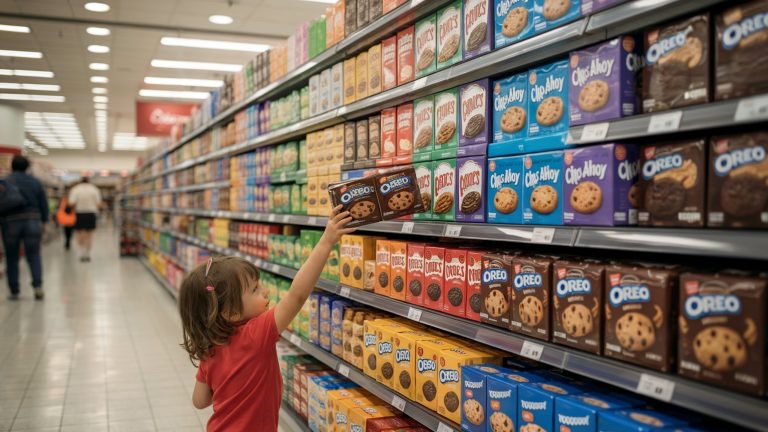
Part I: Introduction – The American Cookie Aisle: A Market Overview
The American packaged cookie market represents a cornerstone of the consumer packaged goods (CPG) industry, embodying a unique blend of nostalgic comfort, affordable indulgence, and continuous innovation. It is a large, mature, and remarkably resilient sector, with 2024 sales estimated at approximately $15.5 billion, marking a 4.6% increase from the previous year. While this growth has been substantially influenced by moderate price increases in a flat volume environment, the market’s projected compound annual growth rate (CAGR) of 4% to 7% through 2030 signals sustained consumer demand and robust health. Annually, Americans consume over two billion cookies, making it the nation’s third most popular dessert choice after ice cream and chocolate.
This enduring appeal is largely driven by the cultural positioning of cookies as an “affordable indulgence,” a small treat that remains accessible even during periods of economic uncertainty. This is coupled with a broader shift in eating habits, where snacking is increasingly replacing traditional meals, positioning cookies as a convenient, energy-boosting option for on-the-go consumption.
The market landscape is dominated by a concentrated group of multinational corporations. Mondelēz International, with its powerhouse brands Oreo and Chips Ahoy!, stands as the undisputed leader. Following are the
Ferrero Group, which acquired the Keebler and Famous Amos brands, and the Campbell Soup Company, which owns the premium Pepperidge Farm line. These giants command significant shelf space within the dominant retail channel: offline, store-based retailers like supermarkets and convenience stores, which account for over 81% of all cookie revenue. Despite this, the e-commerce channel is exhibiting the most rapid expansion, with online snack sales growing at a remarkable 32% rate, far outpacing the low single-digit growth seen in brick-and-mortar stores.
Beneath this corporate superstructure, two powerful and seemingly contradictory consumer trends are shaping the future of the category. The first is a pronounced move toward health and wellness. Consumers are actively seeking cookies that align with specific dietary and lifestyle goals, creating fertile ground for products that are gluten-free, vegan, high in protein, keto-friendly, or low in sugar. This has allowed agile, niche brands like Lenny & Larry’s (high-protein), Made Good (allergy-friendly), and HighKey (keto-friendly) to carve out significant market segments, with some generating hundreds of millions of dollars in annual sales.
Simultaneously, the market is witnessing the rise of private label brands. As grocery prices have increased, consumers have shown a willingness to trade down from name brands to store brands, which have captured over $900 million in sales and are steadily gaining market share. This indicates a level of price sensitivity that exists even within an “affordable” category.
The coexistence of these trends reveals a fundamental bifurcation in the cookie market. It is not a single market but two parallel ones operating in the same aisle. One is driven by the desire for permissible indulgence, where legacy brands like Oreo and Chips Ahoy! leverage nostalgia and classic flavors to command nearly a third of all sales. The other is driven by the need for
functional snacking, where health-focused brands cater to specific dietary requirements and wellness goals. The future of the cookie aisle will be defined not by one trend supplanting the other, but by the ability of companies to operate successfully in both spheres. For the established CPG titans, this necessitates a “barbell strategy”: vigorously defending the indulgent core of their heritage brands while simultaneously acquiring or developing authentic niche brands to capture the functional, health-conscious consumer. Failure to navigate this divide risks ceding the highest-growth segments of the market to more nimble and focused competitors.
Part II: The Top 15 – A Definitive Ranking and Analysis
The following ranking identifies the top 15 cookie types in the U.S. packaged cookie market, determined by a synthesis of sales data, market share, and the breadth of brand and variety offerings. This analysis provides a comprehensive deep dive into each category, exploring its history, production, ingredients, and the key players shaping its presence on American grocery shelves.
Table 1: Top 15 US Packaged Cookie Types by Market Presence and Popularity
| Rank | Cookie Type/Style | Defining Characteristic | Key Brands | Est. Market Share (Type) |
| 1 | Chocolate Sandwich Cookies | Two chocolate wafers with creme filling | Oreo, Newman’s Own, Back to Nature, Private Label | 27% |
| 2 | Chocolate Chip Cookies | Drop cookie with chocolate morsels | Chips Ahoy!, Pepperidge Farm, Keebler, Tate’s | 18% |
| 3 | Wafer Cookies | Light, crispy, layered sheets with creme | Voortman, Loacker, Keebler, Pepperidge Farm | 12% |
| 4 | Oatmeal Cookies | Chewy or crisp cookie with oats | Little Debbie, Quaker, Pepperidge Farm, Archway | Part of “Other” 43% |
| 5 | Peanut Butter Cookies | Drop or sandwich cookie with peanut butter | Nutter Butter, Grandma’s, Little Debbie, Quest | Part of “Other” 43% |
| 6 | Sugar Cookies | Simple, versatile butter-and-sugar cookie | Pillsbury, Lofthouse, Great American Cookies, Private Label | Part of “Other” 43% |
| 7 | Shortbread Cookies | Crumbly, butter-rich biscuit | Walkers, Keebler (Sandies, Fudge Stripes), Lorna Doone | Part of “Other” 43% |
| 8 | Fig Bars/Newtons | Extruded bar with fig paste filling | Newtons (Nabisco), Nature’s Bakery, Private Label | Significant Niche |
| 9 | Animal Crackers | Small, lightly sweet, animal-shaped crackers | Barnum’s (Nabisco), Stauffer’s, Mother’s | Significant Niche |
| 10 | Girl Scout Cookies | Iconic, seasonal, mission-driven cookies | Little Brownie Bakers, ABC Bakers | Significant Niche ($900M Sales) |
| 11 | Gingerbread Cookies | Spiced cookie with ginger and molasses | Pepperidge Farm, Stauffer’s, Archway, Nyåkers | Seasonal Niche |
| 12 | Biscotti | Twice-baked, oblong, crunchy Italian cookie | Nonni’s, The Biscotti Company, La Dolce Vita | Niche, Coffee-Pairing |
| 13 | Madeleines | Small, shell-shaped French sponge cake | Entenmann’s, Sugar Bowl Bakery, St Michel | Niche, Cake-like |
| 14 | French Macarons | Meringue-based sandwich with ganache | Ladurée, Le Macaron (Specialty/Frozen) | Gourmet/Premium Niche |
| 15 | Black and White Cookies | Cake-like base with half-and-half icing | Entenmann’s, Lilly’s, William Greenberg | Regional/Bakery Niche |
1. Chocolate Sandwich Cookies
With a commanding 27% of all U.S. cookie sales, the chocolate sandwich cookie is the undisputed king of the cookie aisle. This category’s dominance is almost entirely attributable to one brand that has become a global cultural icon: Oreo.
History
The history of the chocolate sandwich cookie is a classic tale of imitation surpassing the original. The first cookie of this type was not Oreo, but Hydrox, introduced by the Loose-Wiles Biscuit Company in 1908. Hydrox was launched as a premium product, billed as the “aristocrat of cookies” with an ornate, floral-embossed design. Four years later, in 1912, the rival National Biscuit Company (Nabisco) introduced its own version, the
Oreo Biscuit, from its factory in Chelsea, New York City.
Despite Hydrox’s head start and its pioneering status as the first major kosher-certified cookie—a distinction it held for decades before Oreo followed suit—Nabisco’s formidable marketing power and distribution network gradually propelled Oreo to the forefront. Over time, Oreo’s market saturation became so complete that Hydrox, the original, is now widely perceived as the copycat. The name “Oreo” itself is shrouded in mystery, with theories suggesting it derives from the Greek word for mountain,
oros (as early prototypes were hill-shaped), or the French word for gold, or, the color of the original packaging. The modern, intricate wafer design familiar today was developed by Nabisco engineer William A. Turnier in 1952.
Structure and Production
The chocolate sandwich cookie is structurally defined as two hard, embossed chocolate wafers joined by a soft creme filling. The industrial-scale production process is a marvel of automation. It begins with the mixing of dough and the baking of massive, continuous sheets of chocolate wafers. These sheets are then cut into perfect circles by rotary cutters. After cooling, the wafers enter a specialized machine where a flipping mechanism inverts every other row. A depositor then applies a precise, uniform dollop of creme filling onto the flat side of the stationary wafers. In the final step, a robotic arm or mechanical assembler places the flipped, unfilled wafers on top of the creme-laden ones to complete the sandwich. The finished cookies are then stacked, typically on their edge, and fed into flow-wrapping machines for packaging.
Core Ingredients
The characteristic dark, slightly bitter wafers are typically made from enriched wheat flour, sugar, vegetable oil (such as palm or canola), and cocoa processed with alkali, which gives them their deep color and flavor. The creme filling is a simple, shelf-stable fondant composed primarily of sugar, vegetable oil or shortening (often palm and/or soy), and artificial flavorings like vanillin. The use of vegetable shortening instead of butter is critical for ensuring a long shelf life and maintaining the filling’s texture at room temperature.
Varieties and Formats
This category’s sustained growth is fueled by relentless innovation, a strategy perfected by the Oreo brand. The core product has been transformed into a versatile platform for endless variations. These include:
- Filling Variations: The most famous is the Double Stuf Oreo, introduced in 1974, which promises twice the creme filling. This has been followed by
Mega Stuf and a continuous stream of limited-edition and seasonal creme flavors, such as Mint, Peanut Butter, Birthday Cake, Lemon, Toffee Crunch, and Tiramisu.
- Wafer Variations: To appeal to different tastes, Nabisco introduced the Golden Oreo, which features a vanilla-flavored wafer, as well as gluten-free versions of both the classic and Golden cookies.
- Format Variations: The brand has expanded beyond the standard cookie with Oreo Thins for a lighter, crispier experience; Oreo Minis for snacking; fudge-covered varieties; and Oreo Cakesters, a soft, cake-like version of the sandwich cookie.
Leading Brands
- Oreo (Mondelēz International): The category and market leader. Oreo holds a staggering 19% share of the entire U.S. cookie market and generated over $3 billion in U.S. sales in 2020 alone. It is the best-selling cookie brand in the country.
- Newman’s Own (Newman-O’s): A key competitor in the organic and natural foods segment, offering a version made with organic flour and sugar.
- Back to Nature: Another brand focused on simpler, non-GMO ingredients, competing directly with Newman’s Own in the natural foods space.
- Private Label: Nearly every major grocery retailer, including Walmart (Great Value), Kroger, and Target (Favorite Day), offers its own version, often under names like “Twisters” or “Creme Sandwich Cookies,” competing primarily on price.
The success of Oreo is a masterclass in brand stewardship for a mature product. Rather than treating the cookie as a static item, Mondelēz has transformed it into a dynamic platform for continuous innovation. The constant introduction of new flavors, collaborations with celebrities and other brands, and diverse formats keeps the brand culturally relevant and top-of-mind for consumers. This strategy creates a perpetual cycle of news and excitement, driving impulse purchases through limited-time offers and allowing the brand to participate in multiple consumer trends simultaneously—from extreme indulgence with Mega Stuf to portion control with Oreo Thins. This strategic versatility is a primary reason for its enduring dominance, effectively boxing out competitors that offer a more singular, unchanging product.
2. Chocolate Chip Cookies
Holding a solid 18% of the U.S. cookie market, the chocolate chip cookie is the quintessential American treat, a symbol of home-baked comfort that has been successfully translated into a multi-billion-dollar commercial category. Its popularity is rivaled only by the sandwich cookie, and it boasts one of the most diverse ranges of brands and styles on the shelf.
History
Contrary to popular myth, the chocolate chip cookie was not an accident but a deliberate invention. In 1938, Ruth Graves Wakefield, owner of the Toll House Inn in Whitman, Massachusetts, was looking to create a new dessert to accompany ice cream. She added chopped pieces from a Nestlé semi-sweet chocolate bar to a butterscotch nut cookie dough, expecting the chocolate to melt and disperse. Instead, the pieces held their shape, creating the first chocolate chip cookie.
The recipe, which she named the “Toll House Chocolate Crunch Cookie,” was first published in the 1938 edition of her cookbook, Toll House Tried and True Recipes. The cookie’s fame exploded after Wakefield sold the rights to her recipe and the Toll House name to Nestlé in 1939 for the now-legendary price of one dollar and a lifetime supply of Nestlé chocolate. Nestlé began scoring its chocolate bars and packaging them with a special chopper, but soon started producing the iconic teardrop-shaped “morsels” and printing Wakefield’s recipe on every package, a practice that continues today. The cookie’s popularity became an international phenomenon during World War II, as soldiers from Massachusetts stationed overseas shared their care packages from home with fellow troops, who then wrote home requesting the same Toll House cookies. The first mass-produced, shelf-stable chocolate chip cookie,
Chips Ahoy!, was launched by Nabisco in 1963, cementing its place in American pantries.
Structure and Production
The chocolate chip cookie is the archetypal drop cookie. In a commercial setting, the production process begins with large-scale industrial mixers that cream together fats (butter, margarine, or oil blends) and sugars, followed by eggs and vanilla. The dry ingredients are then incorporated, with the chocolate chips added last to ensure they remain intact. This dough is then fed into a
wire-cut machine, which extrudes the dough and uses a reciprocating wire or blade to cut off uniform portions, depositing them onto a moving oven band. The cookies are baked at controlled temperatures, typically between 180–220°C (356–428°F), for a precise duration to achieve the desired texture before being sent down a long cooling conveyor and finally to packaging. A significant portion of the market also consists of refrigerated or frozen pre-portioned dough pucks, which are flash-frozen for sale to foodservice clients and home bakers.
Core Ingredients
The foundational recipe that defines the cookie’s flavor and texture consists of flour, fat (butter is traditional, but commercial versions often use margarine or vegetable oil blends for cost and shelf-life), a combination of granulated and brown sugar (the ratio of which influences crispness and chewiness), eggs, vanilla extract, salt, and a leavening agent like baking soda. The final, crucial component is the chocolate morsels or chips.
Varieties and Formats
This category is broadly segmented by texture, size, and inclusions, offering a wide array of choices for consumers.
- Texture: The primary market division is between crunchy/crispy and soft/chewy. Brands like Chips Ahoy! Original and Tate’s Bake Shop are leaders in the crunchy segment, while Chips Ahoy! Chewy and Pepperidge Farm’s Soft Baked line cater to those who prefer a softer bite.
- Size and Format: Chocolate chip cookies are available in a multitude of sizes, from standard to “chunky” versions with larger chocolate pieces, to mini and bite-sized formats ideal for snacking.
- Inclusions and Flavors: Beyond the classic semi-sweet chocolate chip, the category is filled with variations that include milk chocolate, dark chocolate, white chocolate, and peanut butter chips. Many brands also offer versions with added ingredients like M&M’s candies, Reese’s Peanut Butter Cups, toffee bits, or nuts such as macadamia and walnuts.
Leading Brands
- Chips Ahoy! (Mondelēz/Nabisco): The dominant mass-market brand, holding an 11% share of the total U.S. cookie market and recognized as America’s #1 chocolate chip cookie brand.
- Pepperidge Farm (Campbell Soup Co.): A key player in the premium segment, offering distinct varieties like the crispy Nantucket, the milk chocolate and macadamia Sausalito, and a line of Soft Baked cookies.
- Keebler (Ferrero): Offers the Chips Deluxe and Soft Batch lines, often competing on a value platform.
- Famous Amos (Ferrero): Known for its signature bite-sized, crunchy chocolate chip cookies.
- Tate’s Bake Shop (Mondelēz): A powerhouse in the premium, thin-and-crispy sub-category. Its brand is built on a simple, buttery, “homemade” taste profile that has garnered a loyal following.
- Private Label & In-Store Bakery: Major retailers like Costco (Kirkland Signature), Walmart (Great Value, Marketside), and Target (Favorite Day) offer competitive products. In-store bakery versions are particularly popular as they are perceived as being fresher and more “homemade” than their packaged counterparts.
The chocolate chip cookie category is not merely segmented by texture but by a perceived spectrum of authenticity. At one end lies the mass-produced, perfectly uniform, and affordable Chips Ahoy!, a reliable pantry staple. In the middle are premium CPG brands like Pepperidge Farm, which use distinct names, packaging, and ingredient call-outs (like macadamia nuts) to evoke a more gourmet experience. At the far end of the spectrum are brands like Tate’s Bake Shop, which have built a premium reputation on a thin, crispy, buttery cookie that mimics the taste and appearance of a homemade or small-batch bakery product. This strategy proved so successful that it prompted an acquisition by Mondelēz, allowing the CPG giant to compete at both ends of this authenticity spectrum. This dynamic reveals that for this specific cookie, consumer perception of “taste” is deeply intertwined with the perception of its origin and craft. There is a clear willingness to pay a premium for products that successfully replicate an artisanal or homemade experience, creating a significant market opportunity for brands that can effectively communicate quality and authenticity through their ingredients, texture, and branding.
3. Wafer Cookies
Representing a significant 12% of the U.S. cookie market, wafer cookies are distinguished by their exceptionally light, crisp texture and layered construction. This category encompasses a wide range of products, from simple cream-filled sandwiches to elegant rolled wafers and iconic single-layer cookies used in classic American desserts.
History
The wafer is one of the oldest forms of baked goods, with its origins tracing to the development of waffle irons in 9th-century Europe. However, the modern cream-filled wafer sandwich cookie has a more recent history. It was pioneered in 1898 in Vienna, Austria, by Josef Manner. His “Neapolitaner Schnitten” featured five layers of delicate wafers filled with a hazelnut cream, the nuts for which were sourced from Naples, Italy, giving the style its name. This established the fundamental structure of layering thin, crispy wafer sheets with a sweet creme filling that defines much of the category today.
In the United States, Nabisco introduced two foundational wafer products around the same time. The Vanilla Wafer, created in 1898 from a recipe by German immigrant Gustav A. Mayer, became a national staple, though it is a distinct, non-layered, disc-shaped wafer. In 1967, its name was officially changed to the now-famous
Nilla Wafer. In 1924, Nabisco launched the
Famous Chocolate Wafer, a thin, dark chocolate wafer that became iconic as the essential ingredient for no-bake icebox cakes.
Structure and Production
Wafer cookies are characterized by their extreme thinness, crispness, and light, airy structure, often featuring a finely etched waffle or cross-hatch pattern. The production process is unique among cookies. It begins with a very liquid, low-viscosity batter made from flour, water, and fats. This batter is deposited onto large, engraved baking plates that are hinged together. The plates are heated to a high temperature (e.g., 180°C or 356°F) for a very short time (around 2 minutes), which rapidly cooks the batter and drives the moisture content down to less than 2%, creating the wafer’s signature crispiness.
After baking, the large wafer sheets are cooled on an arch-type conveyor. For sandwich-style wafers, a cream spreading machine applies a uniform layer of filling onto the sheets. Multiple sheets are then stacked, or laminated, to create a “book,” which is passed through a cooling tunnel to set the cream. Finally, the cooled books are cut into their final shapes—squares, rectangles, or fingers—using taut wires, blades, or circular saws. Rolled wafers, like Pepperidge Farm Pirouettes, are shaped while the wafer sheet is still hot and pliable.
Core Ingredients
The wafer itself is remarkably simple, typically consisting of enriched flour, sugar, and a fat source like palm oil or other vegetable oils. The creme filling is primarily composed of sugar, oil (often palm oil for texture and stability), and various flavorings, which can be natural or artificial. Common additions to the creme include cocoa powder for chocolate versions, hazelnut paste, or fruit flavorings.
Varieties and Formats
The wafer category is diverse, with several distinct formats available in grocery stores.
- Flat Sandwich Wafers: This is the most prevalent format, featuring layers of wafer and creme. The flavor variety is extensive, including vanilla, chocolate, strawberry, lemon, hazelnut, coconut, and peanut butter.
- Rolled Wafers: Often positioned as a premium offering, these are thin wafer sheets rolled into a delicate, hollow cylinder and frequently lined with a chocolate or hazelnut creme. The Pepperidge Farm Pirouette is a leading example.
- Coated Wafers: This sub-category includes wafers that are fully or partially enrobed in a chocolate or fudge coating. Keebler Fudge Sticks and Little Debbie Nutty Buddy bars are iconic examples.
- Sugar-Free/Zero Sugar: A significant and growing segment of the wafer market, led by the brand Voortman, which caters to diabetic and health-conscious consumers with a wide array of sugar-free options.
- Nilla Wafers: While structurally different, Nabisco’s Nilla Wafers are a major brand within the broader wafer category, known for their use in recipes like banana pudding.
Leading Brands
- Voortman (Hostess Brands): A dominant force in the category, renowned for its extensive flavor range and its leadership position in the sugar-free wafer segment.
- Loacker: A premium Italian brand that has gained significant traction in the U.S. market. It is known for its high-quality ingredients and its signature Quadratini, which are bite-sized wafer cubes.
- Keebler (Ferrero): Offers a range of value-oriented wafer products, including the popular fudge-coated wafer sticks.
- Pepperidge Farm (Campbell Soup Co.): Competes in the premium space with its elegant Pirouette rolled wafers.
- Little Debbie (McKee Foods): The Nutty Buddy bar, a layered wafer with peanut butter creme and a chocolatey coating, is an American classic and a top seller.
- Nabisco (Mondelēz): The Nilla Wafer brand is a category staple with strong brand recognition.
- Bauducco, Gamesa, Goya: These brands have a strong presence in international and Hispanic food aisles and offer a wide variety of wafer cookies.
The wafer’s role in the food industry extends beyond being a standalone cookie. Its unique physical properties—lightness, crispness, structural integrity, and neutral flavor profile—make it an ideal and cost-effective component in other confections. Wafers serve as the edible scaffolding for candy bars like Kit Kat and Toffee Crisp, and they form the crunchy base of products like the Little Debbie Nutty Buddy. This demonstrates that a substantial portion of wafer production is business-to-business (B2B), supplying large confectionery manufacturers. This dual market—both consumer-facing and as an industrial ingredient—makes the wafer category more economically resilient and diverse than it may appear on the grocery shelf. It suggests that the total market for wafer technology is significantly larger than just the cookie aisle sales figures would indicate.
4. Oatmeal Cookies
Oatmeal cookies are a deeply entrenched part of the American cookie landscape, celebrated for their chewy texture and wholesome appeal. This category’s strength lies in its ability to bridge the gap between an indulgent treat and a perceived “healthier” snack option.
History
The oatmeal cookie’s lineage can be traced back to Scottish oatcakes, which were hard, savory, and simple biscuits made from oats, often carried by soldiers as a durable source of energy. The transformation from a hard biscuit to a sweet, chewy cookie occurred in the late 19th century in America. The first officially recorded recipe for an
oatmeal raisin cookie was published by the influential American culinary expert Fannie Merritt Farmer in her 1896 edition of the Boston Cooking-School Cook Book.
From their inception, oatmeal cookies were marketed with a “health food” halo, a perception that helped them gain rapid and widespread popularity. This image was powerfully solidified in the early 1900s through a brilliant marketing strategy by the
Quaker Oats Company. The company began printing its recipe for oatmeal cookies directly on its iconic cylindrical oat containers, making the recipe a fixture in American kitchens and inextricably linking the cookie to their brand.
Structure and Production
The oatmeal cookie is a classic drop cookie, and its commercial production method is very similar to that of the chocolate chip cookie. The process begins in large-scale industrial mixers where fat (butter or shortening), sugars, eggs, and spices are creamed together. This is followed by the addition of flour and other dry ingredients, and finally, the oats and raisins are folded in. The resulting dough is then fed through a depositor or a wire-cut machine, which portions out uniform amounts of dough onto vast baking sheets or a continuous oven band. The cookies are baked until their edges turn golden brown while the centers remain soft, as they continue to firm up during the cooling process on long conveyor belts.
Core Ingredients
The defining ingredient is rolled oats, which provide the cookie’s signature hearty flavor and chewy texture. The base dough consists of flour, a fat source (butter, shortening, or margarine), a mix of brown and white sugar, eggs, a leavening agent (typically baking soda), salt, and warming spices—most commonly
cinnamon and nutmeg. Plump
raisins are the classic inclusion that completes the iconic flavor profile.
Varieties and Formats
The oatmeal cookie category offers a range of styles catering to different consumer preferences.
- Texture: The primary distinction in the market is between the classic American soft and chewy style and the less common thin and crispy style, which is more akin to a traditional Scottish oatcake.
- Inclusions: While oatmeal raisin is the quintessential combination, popular variations include oatmeal chocolate chip, oatmeal with walnuts, and plain oatmeal cookies. Iced oatmeal cookies, with a thin layer of hardened icing, are another popular sub-category.
- Sandwich Format: The most famous oatmeal cookie product is arguably the Little Debbie Oatmeal Creme Pie. Introduced in 1960 as the first snack under the Little Debbie brand, it consists of two soft, chewy oatmeal cookies sandwiched together with a sweet “creme” filling.
- Health-Focused Variations: Leveraging its wholesome image, this category is a prime target for health-oriented innovation. Brands like Lenny & Larry’s offer high-protein versions, while others have developed gluten-free, vegan, or reduced-sugar options to appeal to modern wellness trends.
Leading Brands
- Little Debbie (McKee Foods): A dominant force, particularly in the oatmeal sandwich cookie segment, with its iconic Oatmeal Creme Pie generating sales of $236.5 million in a single year.
- Quaker Oats (PepsiCo): Although primarily an oats producer, the brand’s historical association and on-package recipes make it a de facto leader in the category, and it does offer its own line of packaged cookies.
- Pepperidge Farm (Campbell Soup Co.): Offers both soft-baked (Santa Cruz variety) and thin and crispy oatmeal cookies, competing in the premium segment.
- Archway (Snyder’s-Lance): A long-established brand known for its classic soft and crispy oatmeal cookie varieties.
- Tate’s Bake Shop (Mondelēz): Competes in the premium thin-and-crispy segment with its popular oatmeal raisin cookie.
- Grandma’s (Frito-Lay/PepsiCo): A major player in the single-serve and vending machine market with its classic soft oatmeal raisin cookie.
The enduring market strength of the oatmeal cookie is significantly bolstered by a “health halo” effect. Its history is rooted in the perception of being a “health food,” and this image persists today, even though many commercial versions are nutritionally similar to other indulgent cookies. The presence of oats, a whole grain associated with heart health and fiber, provides a psychological permission slip for consumers. This allows them to feel better about their choice, positioning the oatmeal cookie as a justifiable indulgence. This unique marketing advantage makes the category exceptionally fertile ground for “better-for-you” innovations. Brands can leverage the inherent wholesome perception of oats to appeal to consumers seeking a balance between taste and wellness—a consumer who might feel a pang of guilt over a chocolate-heavy cookie but can rationalize an oatmeal raisin one. This positions the oatmeal cookie category as a key battleground for products that aim to bridge the gap between pure indulgence and functional health.
5. Peanut Butter Cookies
As the second most popular cookie flavor in America after chocolate chip, the peanut butter cookie is a beloved classic with a uniquely American origin story. It occupies a significant space in the market, with offerings that range from simple drop cookies to iconic branded sandwich cookies.
History
The peanut butter cookie is inextricably linked to the work of George Washington Carver, the famed agricultural scientist from the Tuskegee Institute. In the early 20th century, Carver promoted peanuts as a replacement crop for cotton, which had been devastated by the boll weevil. To encourage its adoption, he published a research bulletin in 1916 titled
How to Grow the Peanut and 105 Ways of Preparing it for Human Consumption, which included three recipes for cookies made with crushed or chopped peanuts.
Peanut butter itself had been developed in the late 19th century as a protein-rich food for people with poor teeth or difficulty chewing. Recipes explicitly listing peanut butter as an ingredient began to appear in the 1920s. The cookie’s popularity surged during the Great Depression, as its core ingredients were affordable and provided good nutritional value.
The cookie’s most distinctive feature—the criss-cross pattern made with fork tines—was first referenced in a recipe in the Schenectady Gazette on July 1, 1932. The practice was then widely popularized by the Pillsbury company in its 1933 edition of Pillsbury’s Balanced Recipes. This pattern is not merely decorative; the dense nature of peanut butter cookie dough requires it to be flattened to ensure even baking.
Structure and Production
Peanut butter cookies are most commonly produced as drop cookies, but the category’s most iconic brand, Nutter Butter, is a sandwich cookie. The commercial production of the drop cookie version follows the standard process: large-scale mixing of ingredients, forming the dough into balls using a depositor or wire-cutter, and baking in a conveyor oven. While the fork-press mark is a hallmark of homemade versions, many commercial drop cookies are simply molded into a round shape. For sandwich cookies like Nutter Butter, two peanut-shaped wafers are baked, cooled, and then joined with a peanut butter-flavored creme filling using an automated process similar to that for Oreos.
Core Ingredients
The defining ingredient is, of course, peanut butter, which provides the dominant flavor, a significant portion of the fat, and structural density. The base dough typically includes all-purpose flour, a fat source (butter and/or shortening), a combination of brown and white sugar, and eggs. The creme filling used in sandwich versions is generally a mixture of sugar, vegetable oil, and either peanut butter or peanut flour for flavoring.
Varieties and Formats
- Classic Drop Cookie: The traditional round cookie, often featuring the criss-cross pattern, available in both soft/chewy and crunchy textures.
- Sandwich Cookie: This segment is dominated by Nabisco’s Nutter Butter, which features two peanut-shaped wafers sandwiching a peanut butter creme filling. Variations include Double Nutty (more filling) and fudge-covered versions.
- Wafer Format: The Little Debbie Nutty Buddy is a multi-layered wafer bar with peanut butter creme and a chocolatey coating, which is a significant product in this flavor category.
- Inclusions: Peanut butter is frequently paired with chocolate. This includes cookies with chocolate chips or chunks, as well as brand collaborations like the Chips Ahoy! with Reese’s Peanut Butter Cups.
- Health and Protein Focus: The peanut butter cookie is a major focus for the functional food market due to peanut butter’s natural protein content. Brands like Quest Nutrition and Lenny & Larry’s have very popular high-protein peanut butter cookie offerings.
Leading Brands
- Nutter Butter (Mondelēz/Nabisco): The definitive brand for peanut butter sandwich cookies, with powerful brand recognition.
- Little Debbie (McKee Foods): A major competitor with its Nutty Buddy wafer bars and Peanut Butter Creme Pies.
- Grandma’s (Frito-Lay/PepsiCo): Holds a strong position in the single-serve and convenience store channels with its classic soft-baked peanut butter cookie.
- Quest Nutrition & Lenny & Larry’s: Leaders in the high-protein cookie segment, where peanut butter is a cornerstone flavor.
- Private Label: Retailers like Walmart (Great Value) and Kroger offer their own sandwich and drop cookie versions, competing on price.
A key factor in the peanut butter cookie market is the power of a unique form factor as a branding tool. While other drop cookie categories like chocolate chip and oatmeal see brands competing primarily on taste and texture, the most successful and defensible brand in the peanut butter space, Nutter Butter, built its identity on its proprietary peanut-shaped sandwich cookie. This distinctive physical shape is instantly recognizable and creates a strong brand moat that is difficult for competitors, especially private labels, to imitate without infringing on trade dress. While many companies make peanut butter cookies, only one brand
is the peanut-shaped cookie. This demonstrates that in a crowded CPG category, innovation in physical form can be as potent a long-term strategy as innovation in flavor. The unique shape establishes a powerful visual identity on the shelf and a memorable consumer experience that transcends the base ingredients, explaining why Nutter Butter dominates its specific sub-category while the drop cookie segment remains more fragmented.
6. Sugar Cookies
The sugar cookie holds a unique position in the American market, not just as a product but as a versatile platform for seasonal celebration and creative expression. Its simple, sweet profile makes it the perfect canvas for a vast array of formats, from refrigerated dough to elaborately frosted bakery treats.
History
The modern sugar cookie’s lineage traces back to the mid-18th century and the German Protestant settlers of Nazareth, Pennsylvania. They are credited with creating a simple, buttery, and crumbly cookie that was often shaped like the state’s keystone symbol. This was an evolution of earlier European recipes and, more directly, the Dutch
koekje (meaning “small cake”) from the 1700s. The koekje was one of the first baked goods in the American colonies to utilize chemical leavening in the form of “pearl ash,” an early precursor to baking soda.
The term “sugar cookie” gained common usage in the late 19th century, primarily to distinguish this plain, unadorned cookie from newer, more complexly flavored varieties like oatmeal and peanut butter. Early versions were often hard and simple, prized for their low cost and long shelf life. The richer, more tender, and vanilla-flavored cookie that is popular today did not emerge until the 1930s, when ingredients like butter and vanilla extract became more affordable and widely available.
Structure and Production
The sugar cookie is exceptionally versatile in its structure. It can be produced as a soft, thick drop cookie or, from a stiffer dough, as a rolled and cut cookie, which is ideal for creating specific shapes. In commercial manufacturing, this is achieved by feeding dough through a sheeter to create large sheets of uniform thickness, which are then cut into shapes using rotary cutters or stamping machines.
A highly popular commercial format is the refrigerated “slice and bake” dough log, famously produced by Pillsbury. These logs often feature intricate designs embedded within them, such as pumpkins, ghosts, or Christmas trees. This is accomplished through a sophisticated manufacturing process called co-extrusion, where multiple colors of dough are simultaneously pushed through a specially shaped die to create the final, patterned log.
Core Ingredients
The essence of the sugar cookie lies in its simplicity. The fundamental ingredients are flour, sugar, a fat source (butter for flavor, or shortening for texture and stability), eggs, and a leavening agent such as baking powder or baking soda. Vanilla extract is the most common flavoring. The final texture is highly dependent on the ratio of these ingredients; for instance, a higher proportion of sugar and fat typically results in a crispier cookie that spreads more during baking.
Varieties and Formats
- Plain/Classic: Simple drop or rolled cookies, sometimes finished with a sprinkle of granulated or colored sanding sugar.
- Frosted Sugar Cookies: This is a massive sub-category, especially prominent in grocery store bakery sections. These are typically soft, cake-like cookies topped with a thick layer of colored frosting and sprinkles. Lofthouse is the quintessential brand defining this style.
- Cut-Out/Shaped Dough: Sold as refrigerated, ready-to-bake dough. Pillsbury is the undisputed leader in this segment, famous for its seasonal cut-out cookies for nearly every holiday, including Halloween, Thanksgiving, Christmas, and Easter.
- Flavored Variations: While the base is simple, variations incorporating lemon, almond, or other extracts are also available.
Leading Brands
- Pillsbury (General Mills): The market leader in the refrigerated cookie dough segment, known for its slice-and-bake logs and iconic seasonal shaped cookies.
- Lofthouse (TreeHouse Foods): The dominant brand for the soft, frosted sugar cookies found in the bakery sections of most U.S. supermarkets, with annual sales exceeding $142 million.
- Great American Cookies & Cheryl’s Cookies: These brands specialize in decorated sugar cookies sold online and in retail locations, often positioned as gifts.
- Private Label: Major retailers like Walmart (Freshness Guaranteed), Target (Favorite Day), and Kroger (Bakery Fresh) are significant players in the frosted sugar cookie market, frequently offering products that emulate the popular Lofthouse style.
The sugar cookie’s commercial success is derived less from its intrinsic flavor and more from its function as a blank canvas for seasonal and event-based marketing. Its simple taste and versatile dough make it the ideal base for an endless variety of shapes, colors, and decorations. This is evident across the category: Pillsbury’s entire “Shape” cookie line is built on this principle, offering themed designs for every major holiday. Similarly, Lofthouse and its private-label competitors constantly adapt their frosting colors and sprinkle mixes to align with seasonal events—pastels for Easter, orange and black for Halloween, and red, white, and blue for patriotic holidays. This adaptability allows brands to tap into the powerful emotional and purchasing drivers of holidays, creating predictable revenue spikes throughout the year. The sugar cookie thus serves as a low-risk, high-reward platform for innovation focused on decoration and theme rather than complex flavor development, demonstrating that visual appeal and cultural relevance can be as crucial to market success as core product attributes.
7. Shortbread Cookies
Shortbread cookies occupy a distinct and enduring place in the American cookie aisle, valued for their rich, buttery flavor and uniquely crumbly texture. This category is defined by a fascinating dynamic between authentic, traditional offerings and Americanized, flavor-enhanced variations.
History
Shortbread is a traditional Scottish biscuit with a heritage that dates back to the 12th century. It evolved from medieval “biscuit bread,” which was made by sweetening and drying out leftover bread dough in a low oven to create a hard rusk. The transformation into modern shortbread is credited to the court of
Mary, Queen of Scots, in the 16th century, where French culinary influences led to the replacement of yeast with generous amounts of butter.
The name “shortbread” comes from an old meaning of the word “short,” which referred to a crumbly texture. This texture is a direct result of the high fat (butter) content, which inhibits the formation of long gluten strands in the flour, keeping the biscuit tender and friable. Historically, shortbread was an expensive luxury reserved for special occasions like weddings, Christmas, and the Scottish New Year’s celebration of Hogmanay. The first printed recipe for shortbread appeared in 1736 from a Scotswoman named Mrs. McLintock.
Structure and Production
A defining characteristic of true shortbread is that it is an unleavened biscuit, meaning it contains no baking powder or baking soda. This results in a dense, rather than airy, structure. In commercial production, the process begins by creaming together fat and sugar, followed by the gentle mixing of flour at a low speed to minimize gluten development and preserve the crumbly texture.
The dough is then formed into its final shape, typically through rotary moulding, which can emboss patterns onto rounds or fingers, or by sheeting the dough and cutting it. It is baked at a relatively low temperature until firm and lightly golden. The three traditional shapes are:
- A large circle cut into wedges, known as “petticoat tails.”
- Individual round biscuits, or “shortbread rounds.”
- A thick rectangular slab cut into “fingers.”
Core Ingredients
The hallmark of authentic shortbread is its minimalist recipe, traditionally consisting of just three core ingredients: one part white sugar, two parts butter, and three to four parts plain wheat flour by weight. Salt is also a crucial component for enhancing the buttery flavor. While premium brands like Walkers pride themselves on using 100% pure creamery butter, many mass-market commercial recipes substitute shortening or margarine for cost efficiency and increased shelf stability. Some recipes also incorporate rice flour or cornstarch to achieve an even finer, sandier texture.
Varieties and Formats
- Classic Shapes: The traditional fingers, rounds, and petticoat tails remain popular formats, especially for brands emphasizing authenticity.
- Flavored and Inclusion Varieties: While classic shortbread is plain, the American market offers numerous variations. These include shortbread with pecans (like Keebler Sandies), lemon, toffee, ginger, or chocolate chips. The Honolulu Cookie Company has built a successful niche brand around pineapple-shaped shortbread infused with tropical flavors like lilikoi and Kona coffee.
- Coated Shortbread: The Keebler Fudge Stripes are a famous and highly popular example of a shortbread cookie that has been coated in fudge, creating a distinct product that merges the crumbly texture of shortbread with a sweet, chocolatey exterior.
Leading Brands
- Walkers: The quintessential Scottish brand, Walkers is exported globally and is positioned as the authentic, premium shortbread. Its iconic tartan packaging reinforces its heritage.
- Keebler (Ferrero): A major mass-market player with its popular Sandies line (available in classic and pecan varieties) and its iconic Fudge Stripes.
- Lorna Doone (Mondelēz/Nabisco): A classic American shortbread brand known for its simple, rich, and buttery recipe.
- Pepperidge Farm (Campbell Soup Co.): Offers several shortbread varieties, including Dublin and the butter-rich Chessmen cookies, which are often included in their popular assortment boxes.
- Private Label: Major retailers like Walmart (Great Value) produce their own versions of popular styles, such as fudge-striped and pecan shortbread, competing primarily on price.
The shortbread category clearly illustrates a market split between two successful strategies: purity and Americanization. On one side, Walkers has built a global brand by championing authenticity and tradition. Their marketing focuses on their Scottish heritage and simple, four-ingredient recipe, appealing directly to consumers seeking a “clean label” and traditional product. On the other side is the Americanization of shortbread, exemplified by
Keebler. This approach uses the classic shortbread base but adapts it to mainstream American tastes by adding popular inclusions like pecans (Pecan Sandies) or coating it in fudge (Fudge Stripes). These additions move the product away from its minimalist origins but align it with American preferences for sweeter, more texturally complex snacks. The parallel success of both strategies indicates a segmented consumer base for shortbread: one that values heritage and simplicity, and another that prioritizes flavor innovation and indulgence.
8. Fig Bars (Fig Newtons)
Fig bars, most famously known by the brand name Fig Newtons, are a long-standing fixture in the American cookie aisle. They represent a unique category that straddles the line between cookie and fruit-filled pastry, with a history rooted in 19th-century health food movements.
History
The modern fig bar was born out of the 19th-century belief among physicians that many illnesses were linked to digestive issues, for which they recommended a daily intake of fruit and biscuits. The fig roll was the perfect embodiment of this advice. The commercial success of the product, however, required two key innovations in 1891. The first was a recipe for a commercially viable fig paste filling, developed by Philadelphia baker
Charles Roser. The second was a machine, invented by James Henry Mitchell, that could extrude a tube of dough while simultaneously injecting it with jam or fruit paste.
Roser sold his recipe to the Kennedy Biscuit Company of Cambridgeport, Massachusetts, which began mass-producing the cookies using Mitchell’s machine. The company named the new product
“Newton” after the nearby town of Newton, MA, continuing its practice of naming products after local communities (other examples included Shrewsbury and Beacon Hill). The Kennedy Biscuit Company later merged with several other bakeries to form the National Biscuit Company (Nabisco), which trademarked the product and popularized it across the country, eventually renaming it the
Fig Newton. In a significant branding shift in 2012, Nabisco officially dropped “Fig” from the brand name to broaden its appeal and accommodate a growing line of other fruit-filled varieties.
Structure and Production
The fig bar is a distinctive extruded bar cookie. Its defining manufacturing process is co-extrusion, where a specialized machine featuring a funnel-within-a-funnel design simultaneously pumps out a continuous tube of soft, cake-like dough while injecting the thick fig paste filling into its center. This long, filled dough tube is then cut into individual bars, either before or after baking in a long conveyor oven. The final product is a soft, tender, cake-like pastry that fully encases a jammy fruit filling.
Core Ingredients
The outer pastry is a soft, cake-like dough typically made from flour (often including whole wheat flour), sugar, vegetable oil (such as canola oil), and leavening agents. The characteristic filling is a thick
fig paste, which is usually produced by cooking down dried figs with sugar, water or fruit juice, and often citric acid to provide a tangy counterpoint to the sweetness.
Varieties and Formats
- Fruit Fillings: While fig is the original and most famous filling, the Newtons brand now includes strawberry, raspberry, and apple cinnamon varieties. The competitor brand Nature’s Bakery offers an even wider range of fruit fillings, including blueberry and peach apricot.
- Dough Variations: The classic dough is a simple, soft pastry. Nature’s Bakery has successfully differentiated its brand by using stone-ground whole wheat flour, which appeals to a more health-conscious consumer base. Gluten-free versions from various brands are also available.
- Format: Fig bars are typically sold as rectangular bars and are often packaged in twin-packs, making them a convenient on-the-go snack.
Leading Brands
- Newtons (Mondelēz/Nabisco): The original and iconic brand that created and continues to define the category.
- Nature’s Bakery (Mars, Inc.): A major modern competitor that has effectively challenged Newtons’ dominance by positioning itself as a more wholesome and natural alternative. The brand emphasizes its use of whole grains, real fruit, non-GMO ingredients, and a broader variety of fruit fillings.
- Private Label: Many major retailers offer their own versions of fig bars, including Walmart’s Great Value and Aldi’s Benton’s, which compete primarily on price.
- Other Brands: Other notable brands in this space include Little Debbie and Bobo’s, which offers a gluten-free, oat-based version.
The evolution of the fig bar category provides a compelling case study in brand repositioning. The product was originally born from a 19th-century health movement, but for decades, the Fig Newton brand existed as a somewhat staid, traditional cookie. The recent and significant success of the challenger brand
Nature’s Bakery highlights a powerful market insight: the fig bar’s “health food” origins could be effectively revitalized for a modern audience. Nature’s Bakery built its entire brand identity around this concept, emphasizing stone-ground whole grains, real fruit fillings, non-GMO certification, and vegan-friendly recipes. This messaging stood in stark contrast to the more traditional branding of Newtons at the time. This successful challenge by a competitor that reclaimed the category’s original value proposition forced Nabisco to react, leading to the strategic dropping of “Fig” from the Newton name to emphasize a broader fruit platform and a greater focus on whole grain messaging in its marketing. It demonstrates that even in a mature category, a brand’s historical identity can become a vulnerability if a competitor can articulate that same identity more effectively to a new generation of consumers.
9. Animal Crackers
Animal crackers are a nostalgic and beloved snack, holding a unique place in the market as a product that is part cookie, part cracker, and part toy. Their appeal is rooted in simple flavors and the playful experience of identifying and eating the various animal shapes.
History
The practice of creating animal-shaped biscuits originated in England in the mid-to-late 19th century, and these treats were initially imported to the United States. The first company to produce them domestically was the
D.F. Stauffer Biscuit Company, founded in York, Pennsylvania, which began baking animal crackers in 1871.
However, the brand that would come to define the category is Barnum’s Animals Crackers, launched by the National Biscuit Company (Nabisco) in 1902. Nabisco brilliantly capitalized on the immense popularity of P.T. Barnum’s circus, although no licensing fees were ever paid to the showman. Nabisco’s key innovation was not the cookie itself, but its packaging. For the 1902 Christmas season, they introduced a small box designed to look like a circus wagon cage, complete with a string handle. The original intent was for the box to be hung as a Christmas tree ornament. This iconic packaging transformed the product from a generic item sold in bulk from “cracker barrels” into a branded, portable, and playful snack for children, cementing its place in American culture.
Structure and Production
Animal crackers are technically slightly sweet cookies or biscuits rather than savory crackers. The dough is relatively simple, made from flour, sugar, and a fat source like shortening or oil. In mass production, the dough is rolled into large, thin sheets using a process known as
calendaring. These continuous sheets are then passed under a
rotary die cutter or a stamping press, which is engraved with the various animal shapes and cuts them out of the dough. The crackers are then baked quickly in a long conveyor oven, sometimes for as little as four minutes, before being sent down cooling conveyors for packaging. Some brands, like Stauffer’s, incorporate small holes called “dockers” into their crackers, which allow air to escape during baking, preventing the crackers from rising too much and helping them maintain their distinct animal shapes.
Core Ingredients
The ingredient list for classic animal crackers is typically straightforward, consisting of enriched flour, sugar, soybean oil, high fructose corn syrup, salt, baking soda (as a leavening agent), and natural flavors or spices like nutmeg and mace.
Varieties and Formats
- Plain/Original: The classic, lightly sweet cracker with a hint of vanilla or spice. This is the style of Barnum’s Original and Stauffer’s Original.
- Frosted/Iced: A highly popular variation, led by Mother’s Original Circus Animal Cookies. These are coated in pink and white frosting and covered with colorful rainbow nonpareils, offering a much sweeter and more visually vibrant experience.
- Chocolate: Versions made with a chocolate-flavored dough are also common.
- Coated: More recent innovations include animal crackers dipped in other coatings, such as the Reese’s Dipped Animal Crackers, which are coated in milk chocolate and peanut butter candy.
- Shapes: The specific menagerie of animals varies by brand. Barnum’s has featured 53 different animals throughout its history, including lions, tigers, bears, and elephants, which have been present since the beginning.
Leading Brands
- Barnum’s Animals (Mondelēz/Nabisco): The most famous and iconic brand, defined by its classic red circus-wagon box.
- Stauffer’s (Meiji): The original American producer, known for its bulk packaging options like large bags and bear-shaped plastic jugs.
- Mother’s Cookies (Ferrero): The dominant brand in the frosted animal cookie segment with its iconic pink and white Circus Animal cookies.
- Private Label: Major retailers such as Target (Market Pantry) and Sam’s Club (Member’s Mark) have their own extensive lines of animal crackers, competing on value.
- Austin (Keebler/Ferrero): A brand frequently found in schools and institutions, often chosen for being produced in a nut-free facility.
The animal cracker category serves as a powerful illustration of how packaging and theme can become the primary brand differentiators in a commoditized market. The core product—a simple, lightly sweet biscuit—is largely similar across brands. The key to market success has historically been rooted in the consumer experience created by the packaging, not the cookie itself. Nabisco’s masterstroke was not in inventing the cookie, but in creating the Barnum’s circus box with the string handle. This elevated the product from a generic treat to a portable toy and a memorable childhood experience. Similarly, Mother’s Cookies carved out its market share not by making a better cracker, but by applying a unique and visually distinct layer of
pink and white frosting and sprinkles. Stauffer’s found its niche through value-oriented bulk packaging, such as its signature
bear-shaped jug. This demonstrates that for certain CPG products, the “product” the consumer is buying is not just the physical item but the entire experience enabled by its branding and packaging.
10. Girl Scout Cookies
Girl Scout Cookies represent a unique and powerful force in the American cookie market. They are not a single type of cookie but a portfolio of iconic varieties sold through a seasonal, mission-driven model that generates immense brand loyalty and impressive sales, totaling over $900 million in 2020.
History
The sale of cookies as a way to finance troop activities began as early as 1917, when the Mistletoe Troop in Muskogee, Oklahoma, baked and sold cookies in their high school cafeteria. In the 1920s and 1930s, Girl Scouts across the country baked their own simple sugar cookies with their mothers, using a recipe that was distributed in a 1922 issue of The American Girl magazine. The first officially licensed commercial baker was hired in 1936 to handle the increasing demand. Today, the Girl Scouts of the USA contract with two licensed bakers: Little Brownie Bakers (a subsidiary of Ferrero/Keebler) and ABC Bakers (a subsidiary of Hostess Brands). This dual-baker system is why some cookies have different names and slight variations in recipe depending on the region (e.g., Samoas vs. Caramel deLites, Tagalongs vs. Peanut Butter Patties).
Structure and Production
The structure of Girl Scout Cookies varies widely depending on the specific cookie, as the portfolio includes multiple production styles.
- Molded and Enrobed: Thin Mints, the best-selling variety, are molded cookies that are then fully enrobed in a chocolatey coating.
- Extruded and Coated: Samoas/Caramel deLites are complex cookies made by extruding a ring shape, which is then coated in caramel, rolled in toasted coconut, and drizzled with chocolatey stripes.
- Sandwich: Do-si-dos/Peanut Butter Sandwiches are classic sandwich cookies with an oatmeal cookie base and a peanut butter filling.
- Drop/Molded: Tagalongs/Peanut Butter Patties are simple drop or molded cookies topped with a layer of peanut butter and coated in chocolate.
Production is handled entirely by the two licensed commercial bakeries, which manage the complex logistics of producing millions of boxes for the short, intense selling season.
Core Ingredients
Ingredients vary significantly across the different cookie types. However, common base ingredients include enriched flour, sugar, and vegetable oils (palm, soybean, palm kernel). Specific cookies feature key ingredients like cocoa, peppermint oil (Thin Mints), toasted coconut and caramel (Samoas/Caramel deLites), or peanut butter. The term “creme” is often used for fillings, indicating that they are made with vegetable shortening rather than dairy-based butter or cream.
Varieties and Formats
The Girl Scout cookie lineup is a well-managed portfolio of classic favorites and rotating newer options. The core, best-selling varieties include:
- Thin Mints: A crisp, chocolate-mint wafer enrobed in a chocolatey coating. Universally the most popular Girl Scout Cookie.
- Samoas / Caramel deLites: A crisp cookie ring coated in caramel, rolled in toasted coconut, and striped with a chocolatey coating.
- Tagalongs / Peanut Butter Patties: A crispy cookie topped with peanut butter and covered with a chocolatey coating.
- Do-si-dos / Peanut Butter Sandwich: An oatmeal sandwich cookie with a peanut butter filling.
- Trefoils / Shortbread: A classic, simple shortbread cookie in the shape of the Girl Scout trefoil logo.
Other varieties often include lemon-flavored cookies (Lemon-Ups/Lemonades), s’mores-inspired cookies, and toffee-based cookies (Toffee-tastic).11
Leading Brands
The “brand” is Girl Scouts of the USA, but the manufacturing is done exclusively by two companies:
- Little Brownie Bakers (LBB): A subsidiary of the Ferrero Group.
- ABC Bakers (ABC): A subsidiary of Hostess Brands.
The limited availability and direct-to-consumer sales model, traditionally through Girl Scouts themselves, create a sense of scarcity and event-driven purchasing that is unique in the CPG world. While they are not sold in grocery stores year-round, their massive seasonal sales volume makes them one of the most significant cookie “brands” in the nation.
The immense success of Girl Scout Cookies is not just due to the taste of the products themselves, but to the powerful combination of nostalgia, scarcity, and mission-driven commerce. The cookies are inextricably linked to childhood memories and the support of a well-regarded youth organization. The limited, seasonal availability creates a powerful sense of urgency, transforming the purchase from a routine grocery trip into a special event that consumers eagerly anticipate each year. This “scarcity marketing” model, combined with the direct-to-consumer sales approach that fosters a personal connection between the seller (the Girl Scout) and the buyer, creates a level of brand loyalty and emotional investment that traditional CPG brands cannot easily replicate. The product is more than just a cookie; it is a participation in a cultural tradition and a charitable act, a combination that has proven to be a remarkably effective and durable business model.
11. Gingerbread Cookies
Gingerbread cookies are a cornerstone of holiday baking traditions in the United States, known for their distinctive blend of warm spices and rich molasses flavor. While most prominent during the winter season, they maintain a year-round presence on grocery shelves in various forms.
History
The history of gingerbread is ancient, with early forms of spiced honey cakes found in ancient Egypt and Greece. The modern concept of gingerbread was brought to Europe around 992 AD by an Armenian monk, Gregory of Nicopolis, who taught French Christians how to bake it. By the Middle Ages, gingerbread, flavored with ginger and other spices brought from the East via the Silk Road, became a staple at European fairs.
Gingerbread was often baked into hard cookies that were elaborately decorated. Queen Elizabeth I of England is famously credited with the creation of the first gingerbread man in the 16th century, having the cookies made in the likeness of visiting dignitaries and members of her court. The tradition of making
gingerbread houses originated in Germany in the 16th century and was popularized globally by the Brothers Grimm’s fairy tale, “Hansel and Gretel,” published in 1812.
Gingerbread arrived in America with English and German colonists. The first American cookbook, American Cookery by Amelia Simmons (1796), included recipes for gingerbread, which often used molasses—a cheaper sweetener than sugar—resulting in a softer, more cake-like texture that became characteristic of American-style gingerbread.
Structure and Production
Gingerbread cookies are typically produced from a stiff dough that is well-suited for being rolled and cut into shapes. In a commercial setting, the dough is mixed, chilled to firm up, and then sheeted to a uniform thickness. Rotary cutters or stamping presses are used to cut out the desired shapes, such as gingerbread men. The cookies are then baked on a conveyor oven. The baking time and temperature determine the final texture; a shorter bake time results in a softer cookie, while a longer bake time produces a crispier “gingersnap”. Molded gingerbread, pressed into decorative molds, is another traditional form, though less common in mass production.
Core Ingredients
The defining ingredients of gingerbread are ginger and molasses, which provide its signature spicy warmth and deep, rich flavor. The spice blend is crucial and often includes
cinnamon, cloves, and allspice or nutmeg. The dough base consists of flour, a fat (butter or shortening), sugar (often brown sugar to complement the molasses), eggs, and a leavening agent like baking soda.
Varieties and Formats
- Gingerbread Men: The most iconic shape, especially during the holidays. These are often sold plain or in kits for decorating.
- Gingersnaps: A very popular variation. These are thin, round, and crispy cookies with a strong ginger flavor. They are designed to “snap” when broken.
- Soft Gingerbread Cookies: Softer, chewier cookies, often round or rectangular, that have a more cake-like texture. Little Debbie and Trader Joe’s offer popular versions of this style.
- European Styles: Brands like Nyåkers (from Sweden) and various German brands (like Wicklein and Hermann the German) offer traditional European gingerbread, which is often thinner and crispier (Pepparkakor) or sometimes filled with fruit jam.
Leading Brands
- Pepperidge Farm (Campbell Soup Co.): A major player in the seasonal aisle with its classic “Gingerman” cookies.
- Stauffer’s (Meiji): Known for its classic, affordable gingersnaps.
- Archway (Snyder’s-Lance): Offers both classic gingersnaps and soft gingerbread cookies.
- Nabisco: Produces the well-known Nabisco Ginger Snaps.
- Little Debbie (McKee Foods): Offers popular seasonal soft gingerbread cookies.
- Nyåkers: A Swedish brand known for its authentic Pepparkakor (ginger snaps), often sold in decorative tins, which has found a significant niche in the U.S. market.
- Trader Joe’s: Known for its seasonal offerings, including Gingerbread Sandwich Cookies.
The gingerbread cookie market is heavily influenced by seasonality, with a significant sales spike during the fall and winter holidays. This strong association with Christmas and festive traditions is a primary driver of the category. Brands leverage this by releasing seasonal shapes, decorative kits, and special packaging to align with consumer holiday activities. While gingersnaps maintain a steady year-round presence, the broader gingerbread category thrives on its connection to nostalgia and the emotional resonance of holiday baking, making it a powerful, albeit cyclical, segment of the overall cookie market.
12. Biscotti
Biscotti are a classic Italian cookie that have carved out a distinct and growing niche in the American market, primarily as a sophisticated accompaniment to coffee and other hot beverages. Their unique texture and elegant appearance position them as a premium offering.
History
The history of biscotti dates back to ancient Rome. The name itself is derived from the Latin biscoctus, meaning “twice-cooked” or “twice-baked”. The original Roman biscotti were a simple, durable food made by baking a loaf of dough, slicing it, and then baking the slices again to draw out all moisture. This process created a very hard, dry biscuit that was resistant to mold, making it the ideal long-lasting provision for Roman legions on long campaigns and for sailors, including Christopher Columbus, on extended sea voyages.
The modern biscotti, more refined and flavorful, originated in the city of Prato in Tuscany, Italy, during the Renaissance. These cookies, known locally as
cantucci, were made with almonds, which were abundant in the region. The recipe was perfected in the 19th century by baker Antonio Mattei, whose almond biscotti became a Tuscan staple, traditionally served by dipping into a sweet dessert wine called Vin Santo. Biscotti gained widespread popularity in the United States during the coffeehouse boom of the 1990s, where they were marketed as the perfect crunchy cookie for dipping into lattes and cappuccinos.
Structure and Production
Biscotti are defined by their twice-baked production method. The process begins with the creation of a stiff, relatively dry dough, which is formed into long, flattened logs or slabs. These logs are then baked for the first time until they are firm but not fully cooked through. After the first bake, the logs are removed from the oven and allowed to cool slightly, just enough so they can be handled.
Using a serrated knife, the warm logs are then cut diagonally into individual slices, typically about a half-inch to one inch thick. These slices are placed cut-side down on baking sheets and returned to the oven for a second bake at a lower temperature. This second baking is what dries out the cookie completely, giving biscotti its signature hard, crunchy, and porous texture, which is ideal for dipping.
Core Ingredients
The traditional recipe for biscotti from Prato is simple, consisting of flour, sugar, eggs, and nuts (typically almonds or pine nuts), with no yeast or fat like butter or oil. The eggs are the primary binding agent and source of moisture. Modern American-style biscotti recipes are often richer, frequently including
butter for flavor and a more tender (though still crunchy) texture, as well as baking powder for a bit of lift. Anise extract is a very common traditional flavoring, giving the cookies a subtle licorice note.
Varieties and Formats
- Classic Almond: The most traditional variety, featuring whole or sliced almonds and often flavored with anise or almond extract.
- Chocolate and Nut: A very popular variation that includes chocolate chips or is dipped or drizzled in dark, milk, or white chocolate. Common nut pairings include almonds, pistachios, and hazelnuts.
- Fruit and Spice: Many varieties incorporate dried fruits like cranberries or cherries, or citrus zest like orange or lemon. Spices such as cinnamon are also common.
- Savory: While less common in the mass market, artisanal bakers sometimes produce savory biscotti with ingredients like Parmesan cheese, black pepper, or herbs.
- Format: Almost exclusively sold as individually sliced, oblong cookies. They are often individually wrapped for freshness and convenience, especially in multi-packs.
Leading Brands
- Nonni’s: The most dominant and widely available brand of biscotti in U.S. grocery stores. They offer a vast range of flavors, including the classic Originali (almond), Cioccolati (dark chocolate almond), Salted Caramel, and Turtle Pecan.
- La Dolce Vita: Another major brand, often sold in large tubs at club stores like Costco, known for its classic Italian almond biscotti.
- The Biscotti Company: An artisan brand that has gained traction, focusing on small-batch production and premium ingredients.
- DiBella Biscotti: A brand offering traditional flavors like pistachio cranberry.
- Private Label and Regional Bakeries: Many grocery stores and coffee shops offer their own private label or locally sourced biscotti.
The market position of biscotti is intrinsically tied to the culture of coffee consumption. Their rise to prominence in the U.S. directly mirrored the growth of specialty coffee shops like Starbucks in the 1990s. The cookie’s very structure—hard, dry, and crunchy—is not a flaw but its key feature, making it purpose-built for dipping. This functional relationship with a beverage creates a unique and defensible market niche. While other cookies are standalone snacks, biscotti are often sold and consumed as part of a beverage ritual. This “coffee-pairing” identity allows biscotti brands to position themselves as a premium, adult-oriented treat, distinct from the more child-friendly cookies that dominate the rest of the aisle. This focused positioning has enabled brands like Nonni’s to build a substantial business without needing to compete directly with the mass-market scale of Oreo or Chips Ahoy!.
13. Madeleines
Madeleines are small, delicate French sponge cakes that, due to their size and snackable nature, are marketed and sold alongside cookies in the American grocery aisle. They are prized for their elegant, shell-like shape and their soft, buttery, cake-like texture.
History
The madeleine is believed to have originated in the 18th century in the town of Commercy, in the Lorraine region of northeastern France. The most popular legend attributes their creation to a young servant girl named
Madeleine Paulmier in 1755. After a dispute caused the pastry chef of the Duke of Lorraine, Stanisław Leszczyński (the exiled King of Poland and father-in-law to King Louis XV of France), to walk out, Madeleine stepped in and baked the only recipe she knew: her grandmother’s simple butter cakes. The Duke and his guests, including King Louis XV, were so charmed by the little cakes that they were named “madeleines” in her honor.
King Louis XV’s wife, Queen Marie, introduced the madeleines to the royal court at Versailles, where they became a favorite. However, the madeleine achieved international and literary fame thanks to the French author
Marcel Proust. In his seminal novel, In Search of Lost Time, the narrator dunks a madeleine into a cup of tea, and the taste triggers a powerful, involuntary flood of childhood memories. This “episode of the Madeleine” has made the cake a powerful symbol of nostalgia and the connection between taste and memory.
Structure and Production
Madeleines are small sponge cakes, not cookies, with a texture similar to a light pound cake. Their most distinctive feature is their scalloped, shell-like shape on one side and a characteristic “hump” on the other. This shape is achieved by baking the batter in a special
madeleine pan with shell-shaped depressions.
The batter used is a génoise sponge, which gets its lift primarily from the air beaten into the eggs and sugar. In commercial production, the batter is mixed and then deposited into large trays of madeleine molds. A key step in achieving the signature hump is a thermal shock: the batter is typically chilled before being placed into a hot oven. This causes the outside of the cake to set quickly while the inside continues to rise, pushing upwards to form the hump. After baking, the delicate cakes are cooled and often individually wrapped to preserve their moisture.
Core Ingredients
The ingredients for madeleines are simple and classic: flour, sugar, eggs, and a generous amount of butter, often melted or browned for a deeper flavor. Baking powder is often included to ensure a good rise. Traditional recipes are often flavored with vanilla extract or the zest of a lemon or orange.
Varieties and Formats
- Classic/Plain: The traditional madeleine with a simple butter and vanilla flavor.
- Lemon: A very common variation, flavored with fresh lemon zest or extract.
- Chocolate Chip: A popular Americanized version with mini chocolate chips folded into the batter.
- Coated/Dipped: Some varieties are dipped in chocolate or a lemon glaze.
- Other Flavors: Brands like Mad Mac NYC offer more gourmet flavors like pistachio and hazelnut.
Leading Brands
While many madeleines are sold in fresh bakery departments, several brands have a strong presence in the packaged cookie aisle.
- Entenmann’s (Bimbo Bakeries USA): A major American bakery brand that offers a widely available packaged version of classic madeleines.
- Sugar Bowl Bakery: A leading brand known for its madeleines, often sold in bulk at club stores like Costco. Its products are also co-packed for private label brands like Overjoyed.
- St Michel: An authentic French brand that exports its traditional and chocolate chip madeleines to the U.S., often found in specialty and gourmet markets.
- Donsuemor: Another key player in the American market, offering traditional madeleines that are individually wrapped for freshness.
- Private Label: Retailers like Target (Favorite Day) and Tom Thumb (Overjoyed) have their own branded madeleines.
The market position of the madeleine is that of an accessible luxury. It is perceived as more sophisticated and elegant than a standard drop cookie, bridging the gap between a simple snack and a refined pastry. Its French heritage, delicate texture, and unique shape lend it a premium feel, allowing it to command a higher price point. This positioning makes it a popular choice for adult snacking, coffee pairings, and casual entertaining. Brands leverage this by focusing on quality ingredients (like “real butter” and “fresh eggs”) and often using individual wrapping to reinforce the idea of a special, personal treat. The madeleine succeeds by offering a small taste of French patisserie culture in a convenient, shelf-stable format.
14. French Macarons
The French macaron is a delicate, meringue-based sandwich cookie that has rapidly grown from a specialty patisserie item to a significant player in the gourmet and frozen cookie segments of the U.S. market. Its vibrant colors, diverse flavors, and “Instagrammable” appearance have made it a symbol of modern luxury and culinary craft.
History
The macaron’s history is complex and debated, but its origins are Italian, not French. The name derives from the Italian word maccarone, meaning “paste”. Simple almond meringue cookies, the precursor to the macaron, were produced in Venetian monasteries as early as the 8th century. The cookie is believed to have been introduced to France in 1533 by the Italian pastry chefs of
Catherine de’ Medici when she married the future King Henry II of France.
For centuries, macarons were served as single, simple almond-flavored cookies. They gained fame in 1792 in the town of Nancy, when two Carmelite nuns, seeking asylum during the French Revolution, began baking and selling them to support themselves. They became known as the “Macaron Sisters” (Les Sœurs Macarons).
The modern macaron as we know it—two meringue shells sandwiched together with a filling—was invented in the early 20th century in Paris. Pierre Desfontaines, grandson of the founder of the famed Parisian patisserie Ladurée, is credited with the idea of taking two macaron shells and joining them with a creamy ganache filling around 1930. This innovation transformed the simple cookie into an elegant and versatile confection.
Structure and Production
The French macaron is a meringue-based sandwich cookie. It consists of two smooth, domed meringue shells with a characteristic ruffled “foot” (pied) at the base, sandwiching a layer of filling like ganache, buttercream, or jam.
The production process is notoriously precise and sensitive to humidity and temperature. There are two primary methods for making the meringue base:
- The French Method: Egg whites are whipped to stiff peaks, and then a mixture of finely ground almond flour and powdered sugar is carefully folded in. This folding process, called macaronage, is critical to achieving the correct batter consistency.
- The Italian Method: A hot sugar syrup is poured into whipping egg whites to create a very stable meringue. This is then combined with a paste made from almond flour, powdered sugar, and raw egg whites. This method is often considered more structurally sound and is common in commercial production.
After the batter is made, it is piped into small, uniform discs onto baking sheets. The piped shells must then rest at room temperature to form a thin “skin” on their surface. This skin is what forces the cookie to rise upwards during baking, creating the signature foot. They are baked at a relatively low temperature (e.g., 280-300°F or 138-150°C) until the shells are set. After cooling, they are filled and often “matured” in the refrigerator for at least 24 hours to allow the filling’s moisture to soften the interior of the shells, creating the desired contrast between the crisp exterior and chewy interior.
Core Ingredients
The macaron shell is made from a very short list of ingredients: almond flour (finely ground blanched almonds), powdered sugar, granulated sugar, and aged egg whites. Cream of tartar is often added to stabilize the egg whites. The fillings vary widely, from chocolate ganache (chocolate, cream) to buttercream (butter, sugar, egg yolks) to fruit jams.
Varieties and Formats
The macaron’s versatility lies in its nearly infinite flavor and color combinations. The shells can be colored with gel food coloring, and the fillings can be infused with a vast range of flavors.
- Classic Flavors: Pistachio, Chocolate, Vanilla, Raspberry, Lemon, Salted Caramel, Coffee.
- Gourmet & Modern Flavors: Nutella, Cookies & Cream, Red Velvet, Honey Lavender, Birthday Cake, Blueberry Cheesecake, and more exotic combinations like foie gras or matcha.
- Format: Sold as individual cookies or, more commonly, in gift boxes of various sizes (e.g., 6, 12, or 24). They are also increasingly available in the frozen section of grocery stores, offering a longer shelf life and wider accessibility.
Leading Brands
The U.S. macaron market is a mix of high-end patisseries, specialized online retailers, and grocery store brands.
- Ladurée: The iconic Parisian brand credited with inventing the modern macaron. They have several physical locations in major U.S. cities (New York, Los Angeles, Miami) and offer nationwide shipping, positioning themselves as the ultimate luxury macaron brand.
- Le Macaron French Pastries: A franchise-based company with numerous café locations across the U.S., making authentic French macarons more accessible nationwide.
- Mad Mac NYC: A wholesale and retail brand co-founded by renowned pastry chef Florian Bellanger, supplying restaurants and selling directly to consumers.
- Grocery/Retail Brands: As macarons have grown in popularity, they have appeared in the frozen dessert aisle of retailers like Trader Joe’s and Target (Favorite Day), which offer affordable variety packs.
The macaron’s rise in the U.S. market is a testament to the power of visual appeal and social media in the modern food landscape. Their vibrant colors, elegant shape, and association with Parisian luxury make them highly “Instagram-worthy.” This has fueled a cycle of consumer desire and brand awareness that operates largely outside of traditional advertising. The macaron is not just a cookie; it is a status symbol and an aesthetic object. Its success in the premium and gourmet segments, which now represent a market valued at over $12 billion, shows a clear consumer willingness to pay a significant premium for products that offer not just flavor, but also beauty, craft, and cultural cachet. This positions the macaron as a key indicator of the growing “premiumization” trend in the snack and dessert categories.
15. Black and White Cookies
The black and white cookie is a New York City icon, a unique confection that blurs the line between cookie and cake. While its strongest presence is in the bakeries of the Northeast, it has a dedicated following and a growing footprint in the packaged goods aisle nationwide.
History
The origin of the black and white cookie is a topic of much debate, but it is deeply rooted in the culinary traditions of German and Ashkenazi Jewish immigrants in New York. The cookie is most commonly traced to
Glaser’s Bake Shop, which was opened in the Yorkville neighborhood of Manhattan in 1902 by Bavarian immigrants. The black and white was one of their original offerings. By the mid-20th century, it had become a beloved staple in Jewish bakeries and delis across the city.
A competing origin story points to Hemstrought’s Bakery in Utica, New York, which began making a similar cookie called the “half-moon” around 1925. While the two are often conflated, there are traditional differences: the New York City black and white typically has a firmer, denser cake base with a thin layer of fondant icing, while the upstate half-moon has a fluffier, more cake-like base and is topped with a thicker, softer frosting.
The cookie also has a German counterpart called the Amerikaner, which may have been introduced or popularized in Germany by American GIs after World War II. The black and white cookie was immortalized in a 1994 episode of
Seinfeld, where Jerry used it as a metaphor for racial harmony, famously urging Elaine to “Look to the cookie!”.
Structure and Production
The black and white is structurally a drop cake, not a true cookie. The batter is thicker than a typical cake batter but softer than a standard cookie dough, allowing it to be dropped or piped onto a baking sheet where it spreads into a round shape with a flat bottom and a slightly domed top. After baking and cooling, the cookie is flipped over, and icing is applied to the flat bottom. One half is frosted with white vanilla fondant or icing, and the other half is frosted with dark chocolate fondant or icing.
Core Ingredients
The cake-like base is typically made from flour, sugar, butter and/or shortening, eggs, and milk or sour cream, which contributes to its tender crumb. A hint of lemon extract or zest is often included in the batter to provide a subtle citrus note. The icing is a simple fondant, with the vanilla half made from powdered sugar, water or milk, and corn syrup, and the chocolate half made by adding melted chocolate or cocoa powder to the vanilla base.
Varieties and Formats
The primary “variety” of the black and white cookie is its defining half-and-half frosting. However, some bakeries and brands offer variations:
- Base Flavor: While the classic base is vanilla with a hint of lemon, some bakeries offer a version with a chocolate cake base.
- Seasonal/Custom Colors: The two-color icing concept is easily adapted for holidays or events, with bakeries like William Greenberg Desserts offering versions in red/white/blue for the 4th of July, pink/white for baby showers, or team colors for sporting events.
- Size: Traditionally a large, palm-sized cookie, they are also sold in mini versions.
Leading Brands
The black and white cookie is primarily a bakery item, but several brands have brought it to the packaged goods market.
- Entenmann’s (Bimbo Bakeries USA): One of the most widely available packaged versions, bringing the New York classic to supermarkets across the country.
- Lilly’s Baking Company: A brand specializing in classic bakery treats, their black and white cookies are found in many grocery stores.
- William Greenberg Desserts: A legendary New York bakery that has been making its famous black and whites since 1946. They are considered a benchmark for the style and ship nationwide via platforms like Goldbelly.
- Other Bakery Brands: Many other famous bakeries, such as Carnegie Deli and Carlo’s Bakery (of Cake Boss fame), produce and ship their own versions, leveraging their brand recognition to compete in the direct-to-consumer space.
The black and white cookie thrives on its strong regional identity and cultural significance. It is a product deeply tied to a specific place—New York City—and a specific cultural experience, particularly that of the Jewish delicatessen and bakery. Its market expansion relies on selling this sense of place and authenticity to a wider audience. Brands like William Greenberg and Carnegie Deli are not just selling a cookie; they are selling a taste of New York. This makes the brand’s story and heritage as important as the product itself. The cookie’s unique appearance and its pop culture fame from shows like
Seinfeld further bolster its appeal, making it a recognizable and sought-after specialty item for consumers outside of the Northeast.
Part III: Conclusion – The Future of the Cookie Aisle
The comprehensive analysis of the top 15 cookie categories in the United States reveals a dynamic and resilient market, one that thrives on a delicate balance between tradition and innovation. The U.S. cookie industry, valued in the tens of billions of dollars, is anchored by the immense commercial power of its two largest segments: Chocolate Sandwich Cookies and Chocolate Chip Cookies. These categories, led by the iconic Mondelēz brands Oreo and Chips Ahoy!, leverage deep-seated consumer nostalgia and a relentless pace of flavor and format innovation to maintain their dominance. The market’s structure is a testament to the power of brand equity, where a handful of major corporations—Mondelēz, Ferrero, and Campbell’s—control the most valuable and recognizable names on the shelf.
However, beneath this stable surface, the market is undergoing a significant evolution. The definition of a “cookie” has become functionally broad, encompassing products that are structurally cakes (Black and White Cookies, Madeleines), pastries (Fig Bars), or crackers (Animal Crackers). This blurring of category lines creates a fertile environment for cross-pollination and novel hybrid products. Success is no longer dictated by a single formula but by a complex interplay of factors including perceived authenticity, price sensitivity, and the ability to tap into powerful cultural and seasonal moments.
Looking ahead, several key dynamics are poised to shape the future of the American cookie aisle:
The Continued Evolution of “Better-For-You”: The demand for healthier snack options is not a monolithic trend but a fragmentation into specific consumer needs. The future of this segment lies not in a single “healthy cookie” but in a portfolio of targeted solutions. This includes high-protein cookies for the fitness-oriented consumer, gluten-free options for those with celiac disease or a wellness mindset, low-sugar and sugar-free products for diabetics, and clean-label or organic cookies for families seeking to avoid artificial ingredients. Legacy brands will likely continue their strategy of acquiring or launching dedicated lines to compete authentically in these high-growth niches.
The Premiumization of Indulgence: As everyday snacking becomes more health-conscious, moments of pure indulgence are becoming more deliberate and valued. This creates a significant opportunity for premium and gourmet cookies that offer a superior taste experience through high-quality ingredients like single-origin chocolates, brown butter, and real fruit, as well as artisanal branding. The success of brands like Tate’s Bake Shop and the emergence of luxury direct-to-consumer (DTC) players like Last Crumb signal a growing consumer willingness to pay a premium for a truly exceptional treat.
The Ascendancy of Social Media and Direct-to-Consumer Channels: The visual nature of cookies—especially uniquely shaped or decorated varieties like macarons and frosted sugar cookies—makes them inherently shareable on social media platforms. This visual appeal can drive brand awareness and sales in a way that bypasses traditional advertising. Furthermore, the rise of DTC brands demonstrates a viable path to market that circumvents the high barriers to entry of the national grocery aisle, allowing new players to build direct relationships with consumers and offer greater personalization.
For brands navigating this evolving landscape, the path forward requires strategic agility.
- For Legacy Brands: A “core and explore” strategy appears most prudent. This involves protecting the nostalgic and indulgent appeal of core heritage brands while using targeted line extensions, acquisitions, or new brand launches to make authentic inroads into the high-growth wellness and premium segments.
- For Challenger Brands: The most effective strategy is to avoid direct competition with mass-market leaders on price or scale. Instead, success will come from focusing on a clearly defined niche—be it a specific dietary need, a unique flavor profile, or a commitment to sustainable sourcing—and building a loyal community through DTC channels and savvy social media engagement.
Ultimately, the cookie is no longer just a simple snack; it is an experience. Future growth will be captured by those who innovate in format (such as the burgeoning edible cookie dough category ), create flavor combinations that evoke either comforting nostalgia or a sense of adventure, and design packaging that enhances both convenience and brand storytelling. The American cookie aisle will continue to be a reflection of American culture itself: a place where tradition and progress, indulgence and wellness, coexist and compete for a place in the nation’s pantry.
Share to
Related Resources
How Private Label Growth Can Benefit Emerging Food Brands
Private label has moved well beyond its traditional role as a lower-cost alternative to national brands. Today, retailers are investing…
June 18, 2026
Collaborating on Ingredient Sourcing with Your Co-Manufacturer
Ingredient sourcing has become one of the most complex and risk-sensitive aspects of contract manufacturing. Volatile supply chains, fluctuating raw…
April 24, 2026

How Emerging Brands Can Tackle Supply Chain Disruptions
Strengthening Operational Stability Through Smarter Planning and Strategic Partnerships Supply chain volatility can spell doom for an emerging brand. It…
February 2, 2026
