

Share to


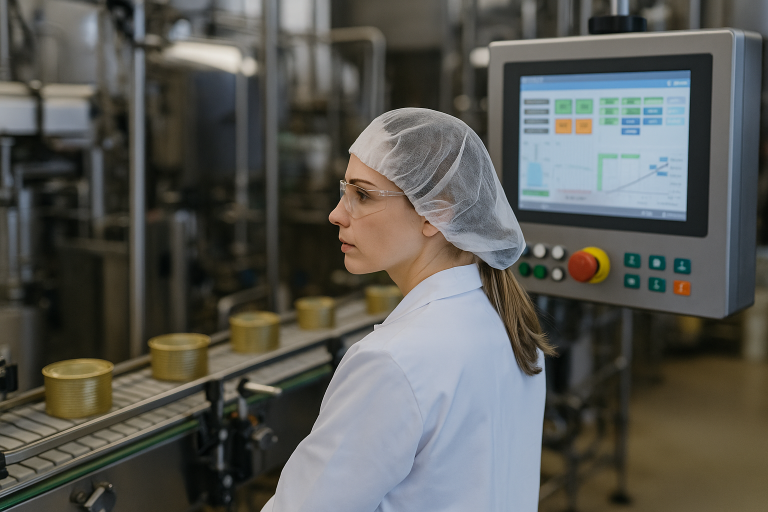
In the hyper-competitive world of consumer-packaged goods (CPG) and food, a brand can live or die by its ability to scale. An entrepreneur might perfect a delicious salsa recipe in their commercial kitchen, find a loyal local following, and even land a few regional grocery accounts. But what happens when a national retailer calls with an order for 50,000 jars a month? For most burgeoning businesses, this dream-come-true scenario quickly becomes a logistical nightmare. They lack the space, the equipment, the capital, and the workforce to meet that demand. This is the pivotal moment where many of today’s most successful brands turn to an unseen engine of the industry: the co-manufacturer.
At its core, a co-manufacturer is a company that produces a product for another company under a contract. They are the silent partner that takes a brand’s proprietary formula or recipe and handles the complex, capital-intensive work of turning it into a finished good, ready for the retail shelf. This strategic partnership model, also known as co-manufacturing, has become a cornerstone of the modern CPG landscape, allowing brands to focus on what they do best—building a brand and connecting with consumers—while leaving the intricacies of production to a specialized expert.
Decoding the Terminology: Co-Manufacturer vs. Co-Packer
While often used interchangeably, the terms within the world of external manufacturing have distinct meanings. Understanding this lexicon is the first step for any business considering outsourcing its production.
The primary term, co-manufacturer, is often used synonymously with contract manufacturer. This relationship is comprehensive. A brand provides the “what” (the recipe, the specifications, the quality standards), and the co-manufacturer provides the “how” (sourcing raw materials, mixing, cooking, processing, and often, final packaging). They are the full-service production arm. A good co-manufacturer acts as an extension of the brand, deeply involved in producing the item from its core ingredients to a finished state. The depth of this partnership is what makes a co-manufacturer so valuable; they are not merely a vendor but a strategic ally in production.
A more limited and specific term is co-packer or contract packager. As the name suggests, a co-packer’s role is focused exclusively on the packaging part of the process. A company might produce its product in-house—for example, roasting its own coffee beans—but then send the finished roasted beans in bulk to a co-packer who has the specialized equipment to grind, weigh, and package them into retail bags. While a co-manufacturer almost always provides packing services, a co-packer does not engage in the actual manufacturing of the product itself.
Finally, external manufacturing is the broad, umbrella term that encompasses both of these activities. It refers to any instance where a company outsources a part of its production or packaging process to a third party. For a business seeking to offload its entire production burden, however, the target is clear: they need to find a dedicated co-manufacturer.
The Strategic Shift: Why Modern Firms Embrace the Co-Manufacturer
Decades ago, outsourcing production was often seen as a last resort or a simple cost-cutting measure. Today, engaging a co-manufacturer is a proactive, strategic decision woven into the business plans of both nimble startups and global CPG giants. The reasons for this shift are multifaceted.
First and foremost is the avoidance of immense capital expenditure. Building, equipping, and certifying a food-grade manufacturing facility can cost millions of dollars and take years to complete. For a growing brand, tying up that much capital in fixed assets is not only prohibitive but also incredibly risky. A partnership with a co-manufacturer transforms this massive capital expense into a predictable, operational cost, freeing up funds for marketing, sales, and innovation.
Second is the critical advantage of scalability. Market demand is rarely static. A product might experience a viral surge from a social media trend or see predictable seasonal spikes. A quality co-manufacturer provides the flexibility to scale production up or down rapidly without the financial burden of idle equipment or the frantic scramble to hire and train staff. This agility is a significant competitive advantage, allowing brands to seize market opportunities the moment they arise.
Third is the accelerated speed to market. Launching a new product involves countless hurdles. By leveraging the existing infrastructure, expertise, and certifications of a co-manufacturer, a brand can bypass years of development and regulatory navigation. A competent co-manufacturer already has the facility, the processes, and the food safety certifications (like SQF, BRC, or organic certifications) in place, allowing for a product to go from concept to shelf in a fraction of the time it would take to build from the ground up. This acceleration is crucial in a market where first-mover advantage can define a product’s success. Every successful brand knows the value of working with an experienced co-manufacturer.
A Universe of Products: Categories Thriving on Co-Manufacturing
The use of a co-manufacturer is prevalent across nearly every aisle of the grocery store. Certain categories, due to their complexity, specialized equipment needs, or required certifications, are particularly reliant on this model.
- Beverages: The beverage industry, from cold-pressed juices and kombuchas to energy drinks and canned cocktails, is a hotbed of co-manufacturing. The equipment for pasteurization, carbonation, and canning or bottling is highly specialized and expensive, making a co-manufacturer the go-to solution.
- Snacks: Nutritional bars, protein puffs, gourmet potato chips, and extruded snacks often require complex mixing and baking processes. A co-manufacturer specializing in snacks will have the correct ovens, mixers, and high-speed packaging lines to produce these items efficiently.
- Sauces, Dips, and Condiments: Products like salsas, marinades, and salad dressings require precise batching and “hot-fill” or “cold-fill” bottling processes to ensure shelf stability and safety, a core competency of any good liquid-focused co-manufacturer.
- Dietary Supplements: The world of vitamins, protein powders, and nutraceuticals is governed by stringent regulations (cGMP). A reputable co-manufacturer in this space will have the necessary certifications and lab testing capabilities to ensure compliance and product safety.
The Tipping Point: When to Seek a Co-Manufacturer
For many founders, the decision to outsource the production of their “baby” is an emotional one. However, specific triggering events often make the choice not just logical but essential for survival and growth.
The most common trigger is simply being overwhelmed by success. A company that started at a farmer’s market may suddenly find its product in high demand, with orders far exceeding its capacity to produce in a commercial kitchen. The founder is spending all their time managing production instead of growing the business. This is the classic inflection point where a co-manufacturer is needed to break through the ceiling.
Another major event is landing a large retail account. A purchase order from a major chain like Target, Kroger, or Whole Foods is a game-changing moment. However, these retailers have stringent requirements for production volume, quality assurance, and food safety certifications that small operations cannot meet. Engaging a pre-vetted co-manufacturer is often the only way to fulfill such an order and establish a foothold in mass retail. When a brand needs to scale quickly, a co-manufacturer is its best asset.
Product line expansion is another powerful catalyst. A successful cookie company may wish to launch a line of gluten-free brownies. This requires sourcing new ingredients, preventing cross-contamination, and obtaining gluten-free certification. Rather than building a new facility, partnering with a co-manufacturer that is already an expert in allergen-free baking is a faster, cheaper, and safer path to market diversification. The right co-manufacturer can turn a new product concept into a reality.
Finally, the decision to work with a co-manufacturer can be a proactive risk management strategy. Relying on a single, self-owned facility creates a single point of failure. A fire, flood, or equipment failure could halt business for months. Using a co-manufacturer, or even multiple co-manufacturers, creates redundancy and ensures business continuity in the face of unforeseen disasters.
In conclusion, the role of the co-manufacturer has evolved far beyond that of a simple outsourced factory. It is a dynamic, strategic partnership that empowers CPG and food brands to achieve scalable growth, foster innovation, and navigate the complexities of a demanding market. From providing financial flexibility to ensuring regulatory compliance, the co-manufacturer serves as the foundational support system that allows a brand to thrive. For any business owner with aspirations of transforming a great product into a household name, the question is not if they will need a co-manufacturer, but when they will be ready to embrace this powerful catalyst for growth. The search for the right co-manufacturer is one of the most important steps a growing brand will ever take.
Share to
Related Resources
How Private Label Growth Can Benefit Emerging Food Brands
Private label has moved well beyond its traditional role as a lower-cost alternative to national brands. Today, retailers are investing…
June 18, 2026

Collaborating on Ingredient Sourcing with Your Co-Manufacturer
Ingredient sourcing has become one of the most complex and risk-sensitive aspects of contract manufacturing. Volatile supply chains, fluctuating raw…
April 24, 2026

How Emerging Brands Can Tackle Supply Chain Disruptions
Strengthening Operational Stability Through Smarter Planning and Strategic Partnerships Supply chain volatility can spell doom for an emerging brand. It…
February 2, 2026
