

Share to


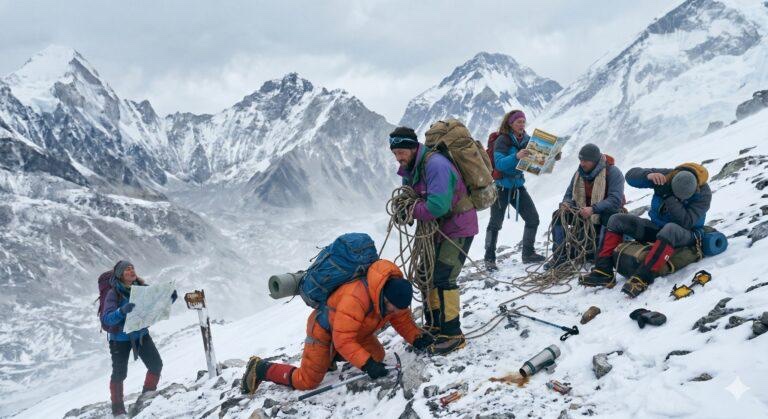
Ask anyone who has stood at Everest Base Camp and they’ll tell you the same thing: no matter how strong your lungs, how seasoned your legs, or how impressive your résumé of past climbs, you do not attempt the summit without a sherpa. It isn’t a matter of strength or self-reliance. The mountain is simply bigger than any one climber. The route changes. The weather turns. The altitude punishes even the experienced. A sherpa carries gear, yes, but more importantly, a sherpa carries knowledge: where to step, when to push, when to wait, and how to bring everyone home alive.
Launching a food brand today is not so different.
The path from concept to commercialization has never been steeper, and the consequences of a misstep have never been more expensive. For small and emerging brands, especially, attempting that climb alone, or with the wrong partner, is the single most preventable reason promising products fail before they ever find their audience.
The Mountain Has Gotten Taller
The modern food landscape is a study in compounding complexity. Consumer expectations have shifted dramatically toward better-for-you formulations: cleaner labels, functional ingredients, allergen-free claims, plant-based proteins, reduced sugar, added fiber, adaptogens, and probiotics. Each of these promises sounds simple on a pitch deck. Each of them is, in practice, a formulation puzzle with implications for shelf life, texture, processing, packaging, and cost. Combining several of them into one product, a low-sugar, high-protein, allergen-free, shelf-stable snack, for instance, is a layered engineering challenge most kitchen-scale founders do not realize they have signed up for until the first scale-up trial.
Layer onto that the demands of the trade. Grocers want SQF or BRC certification, sustainable packaging documentation, traceability data, and reliable fill rates from day one. Retailers will not give a second chance to a brand that misses a PO. Distributors expect ambient stability claims to be backed by real shelf-life studies, not optimism. And buyers increasingly want sustainability narratives backed by real data, from carbon footprint to water usage to recyclable packaging substrates.
Then there is the regulatory environment. The FDA’s continued rollout of FSMA rules, evolving state-level labeling requirements (California’s Prop 65 alone has tripped up countless emerging brands), the patchwork of organic, non-GMO, and clean-label certifications, the constant shifting of nutrition labeling standards, and the looming complications around novel ingredients and front-of-pack warning systems. What was compliant last quarter may not be next quarter. Missing a single regulatory detail can mean a recall, a delisting, or worse.
Add to all of this a supply chain that has not returned to its pre-pandemic rhythm. Ingredient pricing whipsaws on weather, geopolitics, and trade policy. Lead times on packaging stretch from weeks to months without warning. Co-manufacturing capacity itself is constrained in many categories, meaning the brands that build trusted partnerships early get scheduled, and the brands that don’t get squeezed out of the calendar.
This is the mountain. And it gets taller every season.
The Unique Burden on Emerging Brands
For a large CPG company, none of this is easy, but it is manageable. They have in-house R&D, regulatory, operations, procurement, and quality teams. They have years of audit history and pre-negotiated ingredient contracts. They have the capital to absorb a failed launch and the bandwidth to run three more.
Emerging brands have none of that.
The founder of a young food company is typically wearing four hats on a Monday and five by Wednesday. They are the head of brand, head of sales, head of operations, head of finance, and, frequently, head of customer service. They are doing this on capital that has to last until the next round, with margins that are tighter than their investors would like, and against deadlines set by retailer reset windows they cannot move.
Their challenges compound in ways that don’t show up in a pitch deck. As a small buyer, they pay more for ingredients than established competitors, often significantly more, because they cannot meet supplier minimums or negotiate volume tiers. They struggle to secure packaging at reasonable lead times. They are told by retailers to deliver to a national footprint with the operational discipline of a brand five times their size. They are asked for documentation, certifications, audits, and insurance coverage, but they do not yet have the headcount to produce. And they are doing all of this while trying to keep a clear brand vision intact, because the brand is the whole asset.
Hiring experienced operations, quality, or regulatory talent that could ease this burden is itself a problem. The people with the resumes to do it well are expensive, in demand, and largely unavailable to a brand still working toward its first eight-figure revenue year. Even when they can be hired, building the institutional knowledge a co-manufacturer already possesses takes years that a startup does not have.
This is the altitude that ends climbs.
What the Right Sherpa Brings
A capable contract manufacturer does far more than fill a jar or seal a pouch. The right partner brings what an emerging brand cannot reasonably build in-house: decades of formulation experience, scaled processing equipment, established supplier networks, food safety infrastructure, and a regulatory team that lives and breathes compliance.
Start with the financial reality. Partnering with the right CM means a brand does not need to raise the capital required to build, equip, certify, and staff a production facility, which can easily run into the tens of millions of dollars. That capital instead goes to marketing, distribution, and team. Just as importantly, the CM’s existing supplier relationships often unlock ingredient pricing and packaging access that a small brand could never command on its own. The cost savings here alone can mean the difference between a viable margin and a doomed unit economic.
Beyond the balance sheet, the right CM brings technical depth. When a brand walks in with a kitchen-scale prototype, the right partner doesn’t simply tell them whether it can be made. They explain how it changes when you make ten thousand pounds instead of ten. They flag the ingredient that will double in price next quarter because of a supply disruption. They suggest a small reformulation that adds six months of shelf life. They have bench food scientists who can troubleshoot a texture issue in the morning that would take an unaided founder months to chase. They run sensory panels, accelerate shelf-life studies, and stress-test formulations under real processing conditions.
They also bring the infrastructure brands cannot quickly replicate. They hold the certifications, audits, and documentation that grocers demand. They carry the insurance. They maintain the HACCP plans, the allergen control programs, and the traceability systems. When a buyer at a major retailer asks for a quality manual, an FSMA-compliant food safety plan, or a third-party audit report, the right CM delivers it the same day, not in the eight weeks it would take a small brand to assemble for the first time.
They know, critically, what not to do. They have watched brands chase trends that collapsed. They have seen launches fail because of packaging incompatibility, or because the run size didn’t pencil out, or because nobody stress-tested the cold chain. That accumulated experience is the altitude training a small brand simply cannot acquire on its own timeline. The right partner saves founders from learning the most expensive lessons the hard way.
And then there is scale. The right CM lets a brand expand and contract production with the market, ramping up for a major retailer launch, scaling back for a category lull, adding SKUs without adding a single piece of in-house equipment. That elasticity is what allows a small brand to take big swings without betting the company on every one.
Why the Stakes Are Higher
For a multinational, a manufacturing misstep is a bad quarter. For an emerging brand, it is a closed bank account. Every dollar, every week, every shipment matters disproportionately. A blown launch window, a failed audit, a quality issue at retail, these are existential events for a company with a limited runway.
The right partner is a force multiplier. They let a small team punch far above its weight, because the brand isn’t building expertise from scratch in five disciplines simultaneously. The team focuses on what only they can do: building the brand, understanding the consumer, telling the story, while a trusted partner handles the climb.
Speed compounds the advantage. Consumer preferences move faster than ever, retail windows are short, and innovation pipelines have to refresh on a rhythm that didn’t exist a decade ago. A close, collaborative manufacturing partner shortens the distance between idea and shelf. The wrong one, or none at all, lengthens it past the point of relevance.
Choose the Rope You Trust
No serious climber picks a sherpa based on price alone. They look for experience, communication, alignment, and trust. Food brands should do the same. The contract manufacturer relationship is not a transaction. It is a partnership that will shape every product that reaches a shelf, every claim on a label, and every promise made to a consumer. The wrong partner can quietly cap a brand’s potential. The right one can unlock it.
The summit is reachable. But not alone.
Find Your Sherpa
Finding the right partner is often the hardest part of the climb. The industry is full of capable manufacturers, but the right one for your category, your scale, your certifications, and your growth trajectory is a needle in a very large haystack, and the cost of choosing wrong is measured in lost launches and burned runway. That is exactly the problem CoPack Connect was built to solve. We match small and emerging brands with vetted contract manufacturing partners aligned to their product, capacity needs, and ambitions, so founders spend less time cold-calling facilities and more time building the brand.
Ready to find your sherpa? Connect with CoPack Connect today and take the next step toward the summit.
Share to
Related Resources
How Private Label Growth Can Benefit Emerging Food Brands
Private label has moved well beyond its traditional role as a lower-cost alternative to national brands. Today, retailers are investing…
June 18, 2026
From Production to Shelf: How Contract Manufacturers Support Retail Expansion
Retail expansion is the ambition. Surviving it is the discipline. For emerging brands, breaking into a major grocery chain or…
May 20, 2026

Driving Innovation through Co-Manufacturer R&D Labs
Innovation has always been a defining factor in the success of emerging brands. Whether it is a new flavor profile,…
May 14, 2026
